The Stamped blog
Why Timing Matters More Than Volume in Lifecycle Marketing
When you reach customers at the wrong moment—too early, too late, or too often—even the most beautifully crafted message falls flat. But when you reach them at exactly the right time, based on their individual behavior and needs, something else happens: they respond.
Lifecycle
by Aiden Brady
TLDR: Most brands send retention emails on generic schedules (day 30, 60, 90), but customers don’t buy on generic schedules. The result? Missed windows, ignored messages, and lost revenue. Personalized timing—reaching each customer when they’re ready to reorder based on their actual behavior—drives higher open rates, conversions, and customer lifetime value. If you want to win at retention, it’s time to start sending smart emails at exactly the right moments. If you’re ready to automate personalized timing, book a demo with Stamped Lifecycle to see how.
Introduction
Too many brands approach retention marketing like throwing darts in the dark. They send emails on day 30, day 60, day 90… Not because that’s when their customers actually need or want to hear from them, but because that’s what the playbook says to do.
As a result, customers start to tune out, conversion rates plummet, and unsubscribes tick up. Meanwhile, brands are left wondering why their retention efforts aren’t working.
The problem isn’t the content. It’s the timing.
When you reach customers at the wrong moment—too early, too late, or too often—even the most beautifully crafted message falls flat. But when you reach them at exactly the right time, based on their individual behavior and needs, something else happens: they respond.
Why is Timing More Important Than Volume?
There’s a persistent belief in ecommerce that more touchpoints equal more revenue. Send enough emails, the thinking goes, and eventually you’ll catch customers when they’re ready to buy.
This approach treats retention like a numbers game. Ten touchpoints must be better than five. Weekly emails must outperform monthly ones. Cast a wide net, and you’re bound to catch something.
But here’s what actually happens:
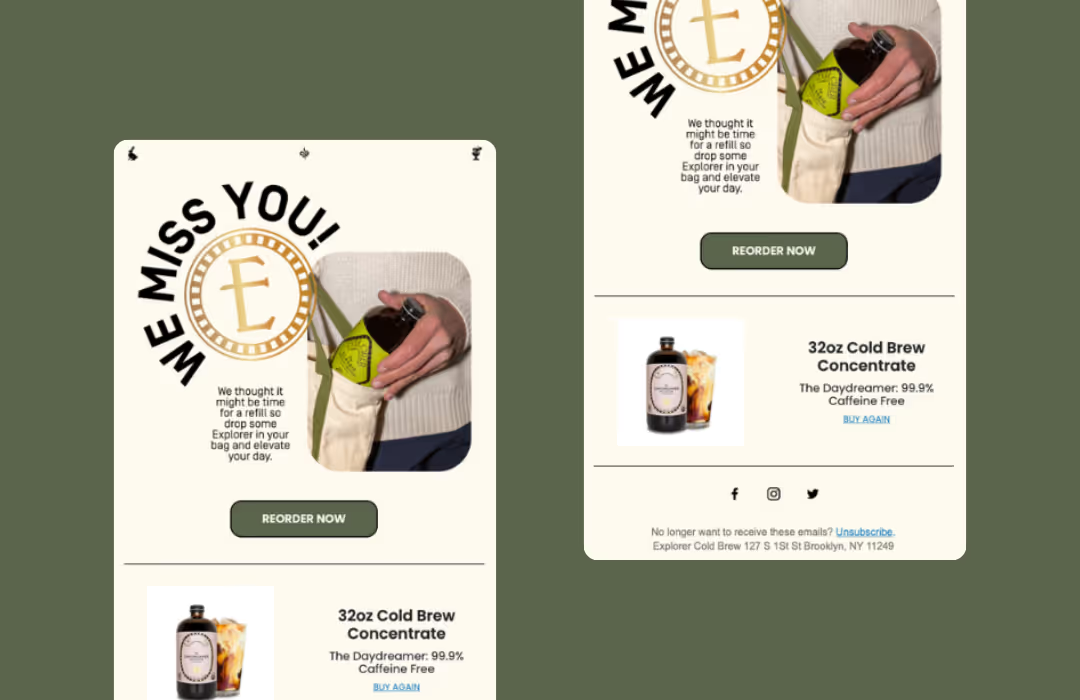
- Customer A buys skincare products every 45 days like clockwork. Your generic 30-day flow reaches them too early; they haven’t even opened the product yet. They ignore it. Your 60-day flow arrives too late; they already reordered from a competitor. You’ve missed the window entirely.
- Customer B just tried your vitamin supplements for the first time. After their initial purchase, your automated subscription upsell flow kicks in immediately, pushing them to commit to a monthly subscription before they’ve even finished the first bottle. They don’t know if the product works yet. The premature pitch feels pushy and presumptuous. They ignore it, and when they do eventually decide they like the product, the moment has passed.
- Customer C purchases supplements sporadically, with no consistent pattern. Your automated sequence bombards them with messages they’re not ready for, training them to ignore everything you send.
More volume doesn’t solve these problems. It amplifies them.
When you prioritize touchpoint quantity over message relevance, you’re essentially asking customers to sift through noise to find the signal. Most won’t bother. They’ll simply unsubscribe or, worse, mentally check out while remaining on your list.
What Happens When Timing Is Right?
Consider what changes when you flip the script: when you send fewer messages, but send them at precisely the moment each customer is ready to receive them.
- Instead of a 30-day reminder that Customer A ignores, they get a message on day 43—right when their moisturizer is running low and they’re already thinking about reordering. The timing feels intuitive. The message feels helpful, not intrusive. They click through and complete the purchase.
- Customer B receives a subscription offer after their second purchase of the same vitamin supplement, proving they like the product and have established a reorder pattern. The timing makes sense. The offer solves a real problem: remembering to restock. They subscribe.
- Customer C, who lacks a predictable pattern, receives messages only when behavior signals suggest they’re ready. They’re not bombarded. They’re engaged thoughtfully.
This is what personalized timing unlocks: messages that feel less like marketing and more like service.
When the timing aligns with customers’ needs, several things happen simultaneously.
- Open rates rise because customers recognize the message is relevant to them right now.
- Click-through rates increase because the call-to-action matches their current intent.
- Conversion rates improve because you’ve eliminated friction (customers were already thinking about making this purchase).
- Unsubscribe rates drop because customers no longer feel pestered. They feel understood.
Timing Across the Entire Lifecycle
While replenishment timing is critical, it’s just one piece of the lifecycle puzzle. Timing matters at every stage of the customer journey.
Cross-sell timing. There’s an optimal window after a first purchase when customers are most receptive to trying something new from your brand. Too early, and they haven’t experienced your product yet. Too late, and they’ve already formed their routine without you. The window typically falls somewhere between 15 and 40 days post-purchase, but varies significantly by vertical and customer segment.
Trial-to-full-size timing. When customers purchase a sample or travel-size product, there’s a natural evaluation period. Reach out too soon, and they haven’t had time to form an opinion. Wait too long, and they’ve either forgotten about the experience or moved on to another brand. Around 14 days tends to be the sweet spot—long enough to try the product, short enough to maintain momentum.
Subscription upsell timing. The best moment to pitch a subscription isn’t after the first purchase. It’s after the second. Why? Because two purchases of the same product demonstrate a pattern. The customer has proven they want this product regularly. They’ve established a replenishment cycle. Now, a subscription offer is solving a real, demonstrated need.
Lapse prevention timing. Every customer has a natural purchase rhythm. Some buy monthly, some quarterly, some annually. When a customer deviates from their established pattern—when they’re overdue for a purchase based on their historical behavior—that’s your signal. Not a generic 90-day winback flow, but a personalized intervention triggered by that specific customer’s unique purchase cadence.
Each of these moments requires different timing, and that timing must be personalized to the individual customer. A one-size-fits-all approach misses the mark.
Shifting From Campaigns to Moments
Traditional lifecycle marketing thinks in campaigns. You build a sequence, set it live, and blast it to everyone who meets the entry criteria.
Timing-driven lifecycle marketing thinks in moments. You identify the key events in a customer’s journey (the moments when they’re most receptive to a specific message), and you automate personalized responses to those events.
It might sound like nothing more than a semantic difference, but it’s a fundamental shift in strategy.
| Campaigns | Moments |
|---|---|
| Static | Dynamic |
| Assume all customers behave the same way | Recognize that every customer is on their own timeline |
| Optimize for volume | Optimize for relevance |
When you embrace this mental model, retention marketing becomes less about pushing messages and more about being present at the right time. You’re meeting customers exactly when they need you.
Why Most Brands Get This Wrong
If personalized timing is so effective, why do most brands still rely on generic, time-based flows?
The answer is simple: it’s harder.
Building a 30-60-90 day flow is straightforward. You can set it up in one day. Calculating product-specific replenishment intervals, segmenting customers by purchase behavior, and triggering messages based on individual consumption patterns? That requires data infrastructure, analytical horsepower, and ongoing optimization.
Most brands don’t have the resources or technical capability to build this themselves, so they default to what’s easy rather than what’s effective.
But there’s a cost to taking the easy route. You’re leaving revenue on the table. You’re training customers to ignore your messages. You’re losing repeat purchases to competitors who reach customers at better moments.
The complexity is real, but so is the opportunity.
What This Means for Your Retention Strategy
If you’re still relying on static, time-based lifecycle flows, here’s what you should be asking yourself:
- Do you know the actual replenishment intervals for each of your products? Not guesses. Not industry averages. The real, observed behavior from your customer base.
- Can you identify when individual customers are ready for their next purchase, rather than applying the same timeline to everyone?
- Are you treating different lifecycle moments—replenishment, cross-sell, subscription upsell, winback—as distinct events with their own optimal timing, or are you lumping them all into generic post-purchase flows?
- Are you measuring success based on how many emails you send, or based on how effectively you drive repeat purchases?
These questions get to the heart of what separates retention marketing that works from retention marketing that wastes everyone’s time.
The Bottom Line
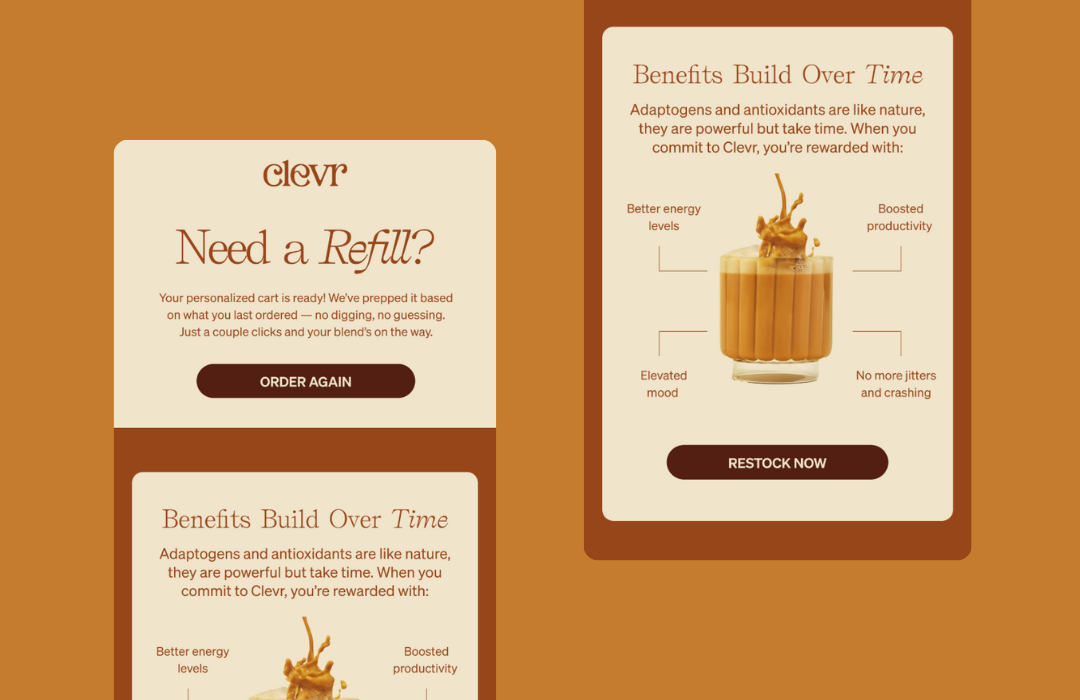
Your customers don’t need more emails. They need better-timed emails.
When you shift from volume-based thinking to timing-based thinking, everything changes. Open rates improve because messages feel relevant. Conversion rates rise because you’re reaching customers when intent is highest. Customer lifetime value grows because you’re building trust through helpful, well-timed communication rather than eroding it through excessive outreach.
The brands that master personalized timing build fundamentally different relationships with their customers; relationships built on respect, relevance, and real value.
That’s the power of getting timing right. And that’s why it matters more than volume ever will.
Ready to Transform Guesswork Into Precision with Stamped Lifecycle?
If you’re ready to move beyond static, time-based flows and start delivering messages at the moments your customers actually need them, Stamped’s Lifecycle automation makes it possible.
Lifecycle analyzes your real customer purchase behavior to automatically calculate product-specific replenishment intervals, identify cross-sell opportunities at optimal moments, and trigger personalized messages across every stage of the customer journey. The result? Higher repeat purchase rates, stronger subscription conversions, and retention marketing that feels helpful instead of intrusive—all automated.
Book a demo with Stamped to see how Lifecycle can turn timing into your competitive advantage and drive predictable, recurring revenue for your brand.
Related Articles

How to Use Lifecycle to Capture Post-Purchase Momentum
Post-purchase momentum is critical. That window immediately following a purchase is when customers are most engaged with your brand, most satisfied with their decision, and most receptive to continued communication.
by Aiden Brady
Lifecycle
Retention Marketing Strategies

What are Plays?
Since Repeat (now called Lifecycle) was acquired by Stamped in 2024, we've been hard at work to unify the two platforms and create an unmatched retention machine for our merchants. Part of that process included sharing ideas and terminologies between the different platforms.
by Aiden Brady
Lifecycle