The Stamped blog
The Review Intelligence Playbook: 10 Actions Every Brand Can Take
These are specific, tactical actions you can take when each signal appears, pulled from what actually worked when real brands stopped analyzing and started acting.
Reviews
by Aiden Brady

Introduction
In our last post, we showed you the 10 review signals that matter most: the patterns hiding in customer feedback that reveal what’s working, what’s broken, and where you’re leaving money on the table.
Reading that post, you probably recognized some of the signals appearing in your own reviews. Maybe you saw subscription friction spiking post-BFCM, or fit complaints dominating your low ratings, or “doesn’t work” language creeping into recent feedback.
The question isn’t whether these signals exist in your data. The question is: what are you actually going to do about it?
This is where most brands stall. They analyze reviews, spot the patterns, have the meeting, agree something should change… and then nothing happens.
The same complaints appear next month. The same friction points cost conversions. The same 1-star reviews cite the same issues.
This playbook is about closing that gap. These are specific, tactical actions you can take when each signal appears, pulled from what actually worked when real brands stopped analyzing and started acting.
#1: When “Works/Doesn’t Work” Language Appears: Test Customer Voice in Your Ad Copy
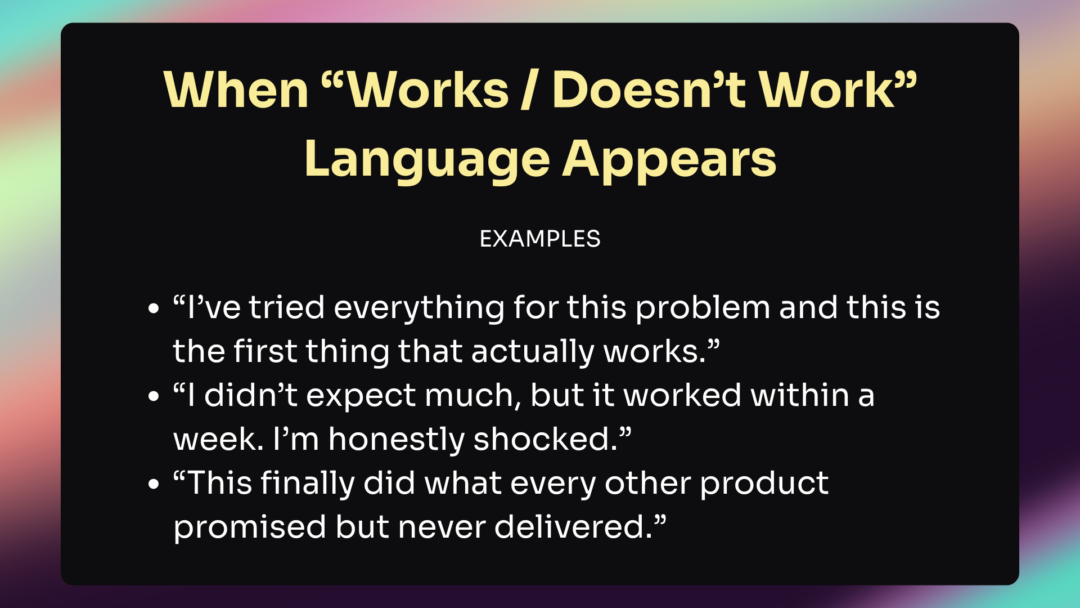
Most brands track efficacy language in reviews but never display them beyond the product page. That’s a missed opportunity.
Here’s what to do instead:
- Pull every 5-star review from the last 12 months that contains “works,” “actually works,” or “finally works.”
- Export them into a spreadsheet.
- Read through and identify the 3-4 most common ways customers describe the results your product delivers.
Now take those exact phrases and build them into your paid ads, email subject lines, and product page headlines. Not paraphrased. Not cleaned up. Verbatim.
The reason this works is simple: marketing language sounds like marketing. Customer language sounds like a friend telling you about something that changed their life. When someone searching for a solution sees another customer saying “this finally worked,” it hits different than any claim you could make.
On the other hand, if your reviews show “doesn’t work” language climbing in low-rated feedback, you have a bigger problem. That’s a product issue, not a marketing gap. No amount of copy testing will fix a product that doesn’t deliver on its core promise.
#2: When Learning Curve Complaints Appear: Build a “First 7 Days” Email Series
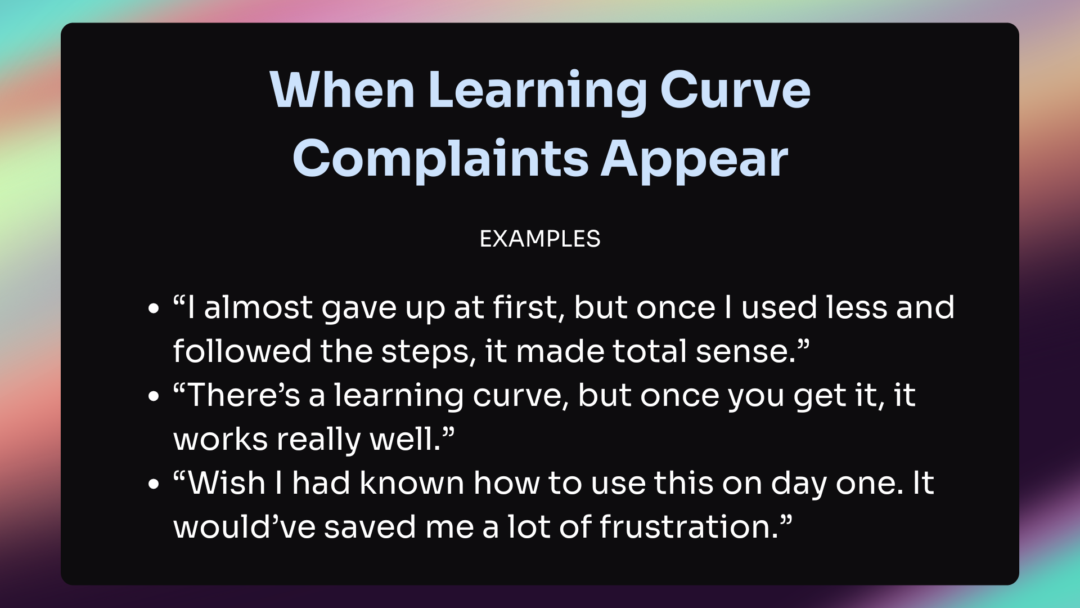
A steep learning curve is almost always just a communication gap. Customers expected one experience and got another. Most give up before they figure it out.
The fix is a three-email sequence that meets customers exactly where they struggle:
- Email 1 goes out the day after delivery: “Getting started with [Product]—here’s what to expect.” Include the single most important tip from your positive reviews (the one thing customers wish they’d known on day one).
- Email 2 goes out on day 4: “Avoid these 3 common mistakes.” Pull these directly from reviews where customers mentioned early frustration but eventually figured it out. Be specific. If people are using too much product, say that. If they’re skipping a step, explain why it matters.
- Email 3 goes out on day 8: “How’s it going? Questions?” Make this one personal and invite replies. A meaningful percentage of people will respond, and their questions become your FAQ content and future email topics.
The goal isn’t to eliminate the learning curve. At the end of the day, some products require skill or even just a little extra attention. The goal is to support customers through it so they reach the moment when everything clicks and they understand why the product is worth the effort.
#3: When Subscription Friction Spikes: Implement Pre-Charge Texts (Not Just Emails)
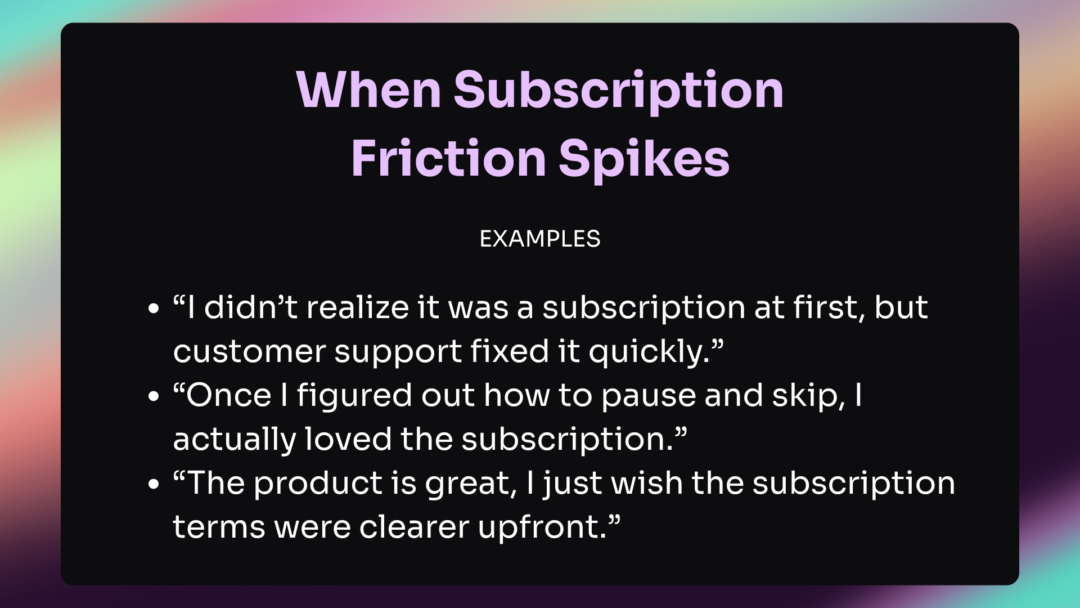
Everyone sends pre-charge emails. Almost no one sends texts. With a 98% open rate compared to just 20% for email, SMS is one of the best ways to make sure that customers are receiving your messages.
If subscription complaints appear in more than 15% of your low-rated reviews, add SMS to your pre-renewal communication. Send a text 3 days before each charge: “Hey [Name], your [Product] renews in 3 days. Reply SKIP to skip this order or PAUSE to pause your subscription.”
Make it actually work. When someone replies SKIP, skip their order—don’t send them to a login page or make them confirm twice. When they reply PAUSE, pause it. The entire interaction should happen in the text thread.
The other move that matters: audit your checkout flow during promotional periods. If you’re converting one-time buyers into subscribers through a discount (common during BFCM), make sure the subscription terms are impossible to miss. Add a confirmation checkbox: “Yes, I understand this is a recurring subscription that will renew on [date].”
Subscription models aren’t inherently problematic. Surprise subscriptions are. Transparency and control are what separate subscriptions that customers love from subscriptions that generate angry reviews.
#4: When Shipping Complaints Cluster: Check if They’re Really About Shipping
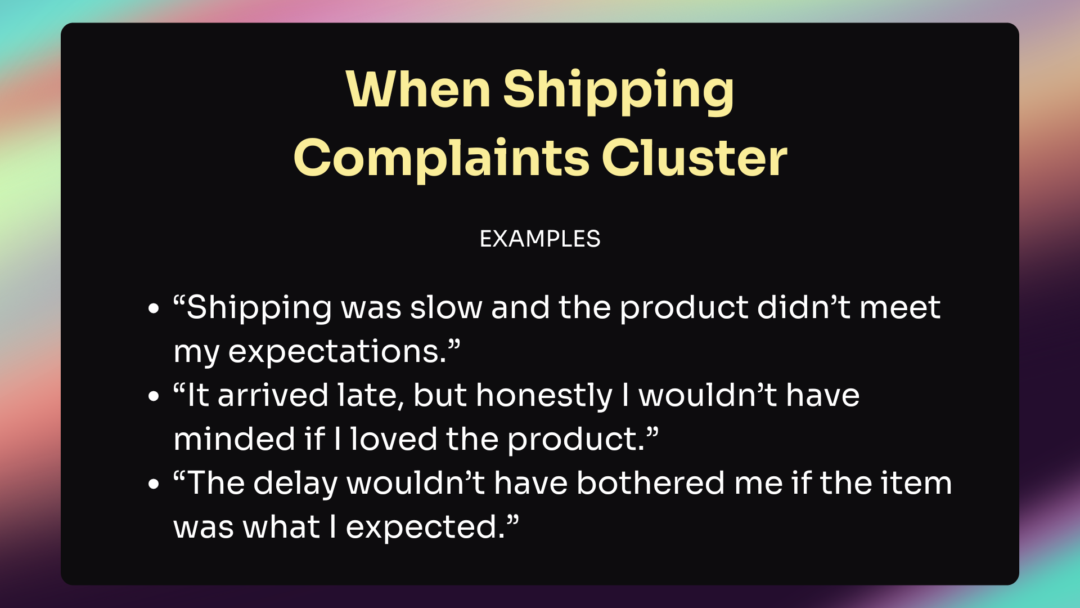
This is the most commonly misdiagnosed signal. Brands see shipping complaints and immediately start investigating carriers, renegotiating rates, or switching fulfillment centers.
Sometimes that’s the right move. But often, shipping is a red herring.
Here’s how to tell the difference: pull all reviews mentioning shipping from your last 12 months. Read through them and note whether shipping is the only complaint or whether it appears alongside product disappointment.
If you see phrases like “The product didn’t work and it arrived late,” or “Not what I expected plus damaged packaging,” shipping isn’t your problem. It’s an amplifier. A customer who loves your product will forgive a delayed delivery. A customer already frustrated will cite shipping as further proof the brand doesn’t care.
If shipping complaints do appear in isolation—especially in otherwise positive reviews—then you have a genuine logistics problem worth solving. But check first. You might be solving the wrong problem.
#5: When Fit Dominates Your Reviews: Add a Post-Purchase Fit Question
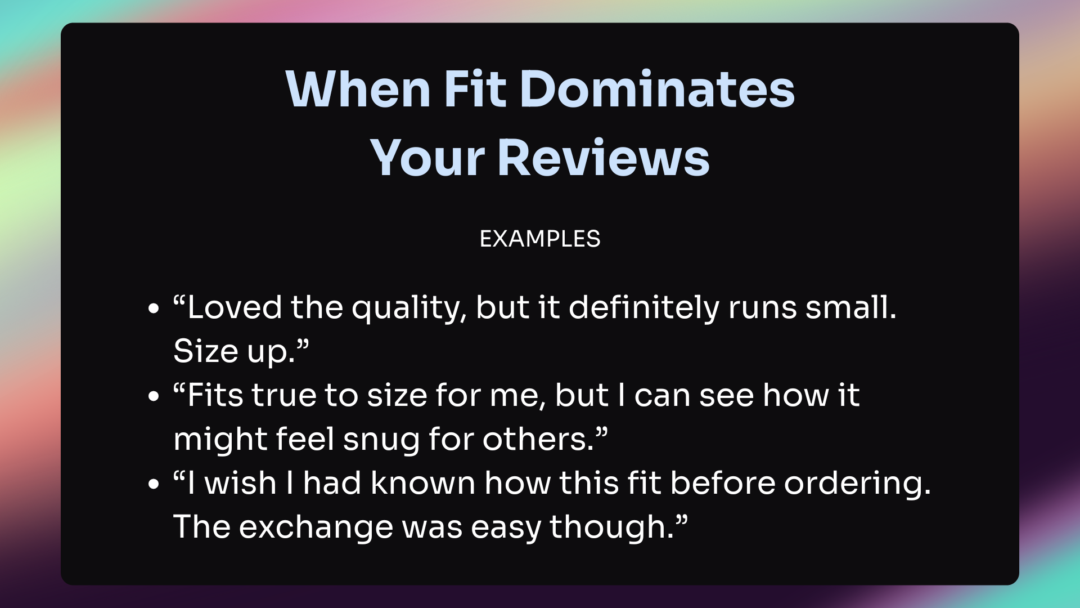
If fit and sizing appear in more than 50% of your reviews (especially in low-rated feedback), you need structured fit data, not just open-ended comments. Add a single custom question to your review request: “How did this product fit?” with three options—Runs Small, True to Size, and Runs Large. If relevant, add optional follow-up questions about height, body type, or what size they ordered.
After you collect 30+ responses per product, display the aggregate data on your product pages: “Based on 47 customer reviews: 64% say True to Size, 28% say Runs Small, 8% say Runs Large.”
This works for any product with subjective fit. Apparel, footwear, furniture, pet accessories, even software (ease of use is fit for digital products). The principle is the same: collect structured feedback and surface it at the decision point.
The ROI here is immediate. Fewer returns, fewer disappointed customers, and better word-of-mouth because people are getting what they actually wanted.
#6: When Expectations Don’t Match Reality: Make Customer Photos Your Primary Product Images
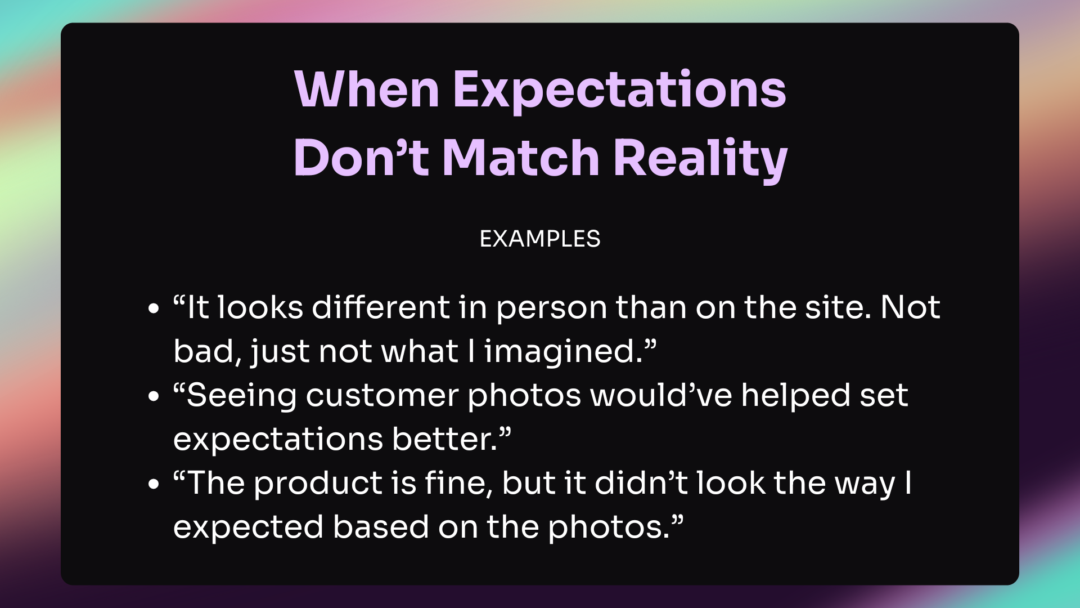
Professional photography is designed to make products look perfect. Customer photos show what the product actually looks like in someone’s home, on their body, or in real-world lighting.
If “not what I expected” appears in more than 20% of low-rated reviews, run this test: create a product page variant where customer-submitted photos appear before your professional shots. Put the UGC gallery at the top. Make it the first thing people see.
Measure return rates, not just conversion rates. Yes, conversions might dip slightly if customers decide something isn’t for them (2-3% is common). But if returns drop 10-15%, you’re building a more profitable business.
The best part is that customer photos don’t hurt trust. They build it. Shoppers know professional photography is aspirational. When they see real people using your product in real conditions, they make better decisions. They know what they’re getting. And when it arrives, it matches what they expected.
#7: When Gift-Giving Language Appears: Create a “Buying for Someone Else?” Upsell

If more than 10% of reviews mention gifting, you’re sitting on an untapped growth lever.
Add smart cart logic that detects gift-buying behavior: shipping to a different address, multiple units, or adding a gift message. When triggered, display an upsell: “Buying a gift? Add premium gift packaging for $5” with a photo showing what it looks like.
On your product pages, add a small section titled “Perfect for gifting” and feature 2-3 reviews from customers who explicitly mentioned buying for someone else. This signals to gift buyers that others have successfully gifted this product and the recipient loved it.
The psychology here matters: gift buyers worry about different things than personal purchasers. They care about presentation, whether the product is intuitive for someone who’s never used it, and whether it’ll make them look thoughtful. When you design an experience that acknowledges those concerns, you remove friction and increase both conversion and satisfaction.
#8: When Formula or Texture Complaints Appear: Create Tutorials While You Fix the Product
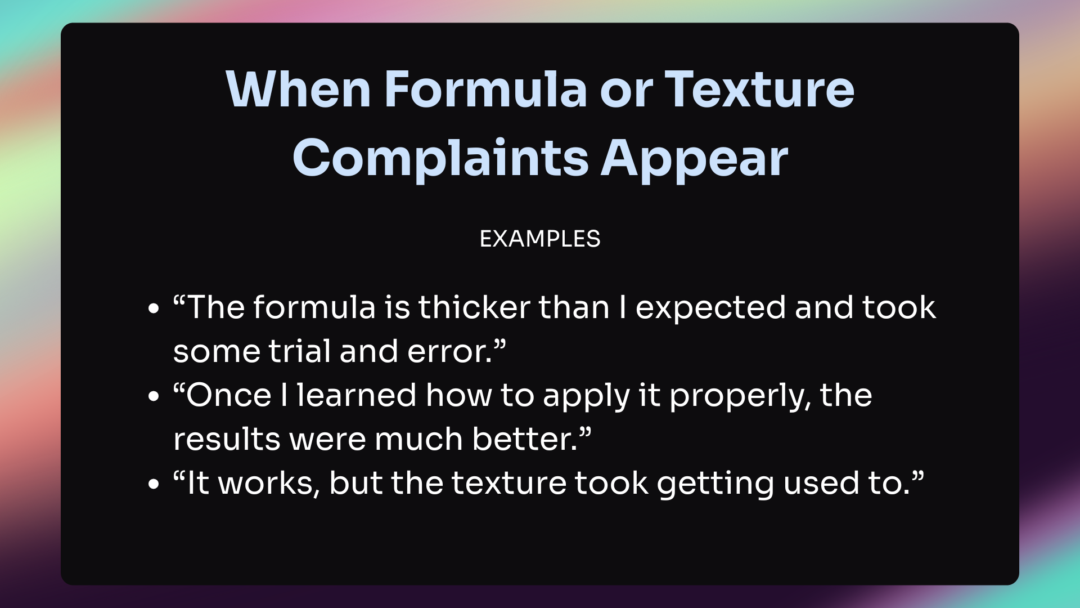
If texture, application, or usability issues appear in more than 30% of low-reviews, you have a product problem that requires R&D attention. Tutorials are a temporary fix, not a solution.
In the short term, here’s what you can do:
- Create an application guide and add it prominently to affected product pages
- Film a 60-second video showing the right technique
- Add a written troubleshooting section addressing the most common complaints
Simultaneously, escalate to product development. Pull every review mentioning “too thick,” “too thin,” “hard to apply,” “messy,” or “patchy” and send them to your product team with a clear directive: these SKUs need reformulation urgently.
The reality is that you can’t educate your way out of a bad formula or difficult-to-use product. Customers will tolerate minor application challenges if the end result is worth it. But if the physical experience of using your product is consistently frustrating, they won’t repurchase no matter how well it works.
This applies across categories—beauty, food, cleaning products, supplements, pet care. Anything customers physically interact with needs to feel good in the moment, not just deliver eventual results.
#9: When Operational Issues Appear: Treat Them as Brand-Trust Violations
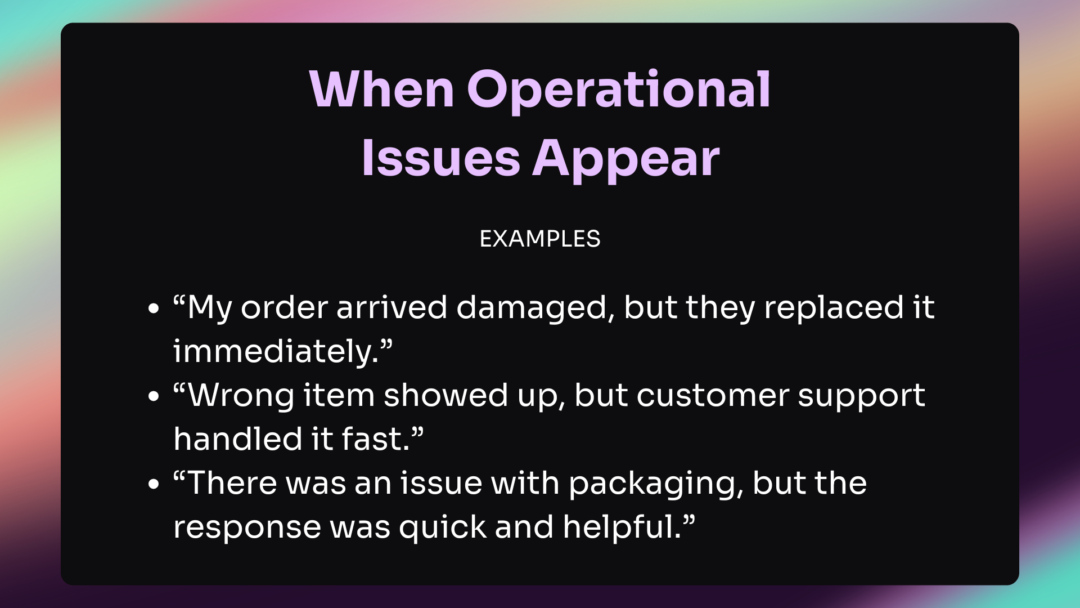
Packaging failures, damaged shipments, wrong items, and leaks might affect a small percentage of orders, but they create disproportionate negativity.
If operational issues appear in more than 10% of low-rated reviews (even if they’re under 5% of total volume), implement a rapid-response protocol. Every review mentioning damage, leaks, or order errors gets a personal reply within 24 hours offering immediate replacement or refund. No questions, no forms, no back-and-forth.
Internally, track these incidents weekly by SKU and fulfillment center. Any product crossing a 10% operational complaint threshold gets a mandatory packaging audit within 7 days.
Operational failures feel personal to customers. They don’t think “shipping mistake,” they think “this brand doesn’t care.” Even if these issues are rare, they carry outsized emotional weight.
Speed of resolution matters more than the mistake itself. When you respond immediately and make it right without friction, you often turn angry customers into impressed ones who update their reviews or buy again despite the initial problem. Responding to negative reviews is vital for retention, with 57% of customers saying they wouldn’t purchase from a business that doesn’t respond to reviews.
#10: When Loyalty Language Appears: Build a VIP Track
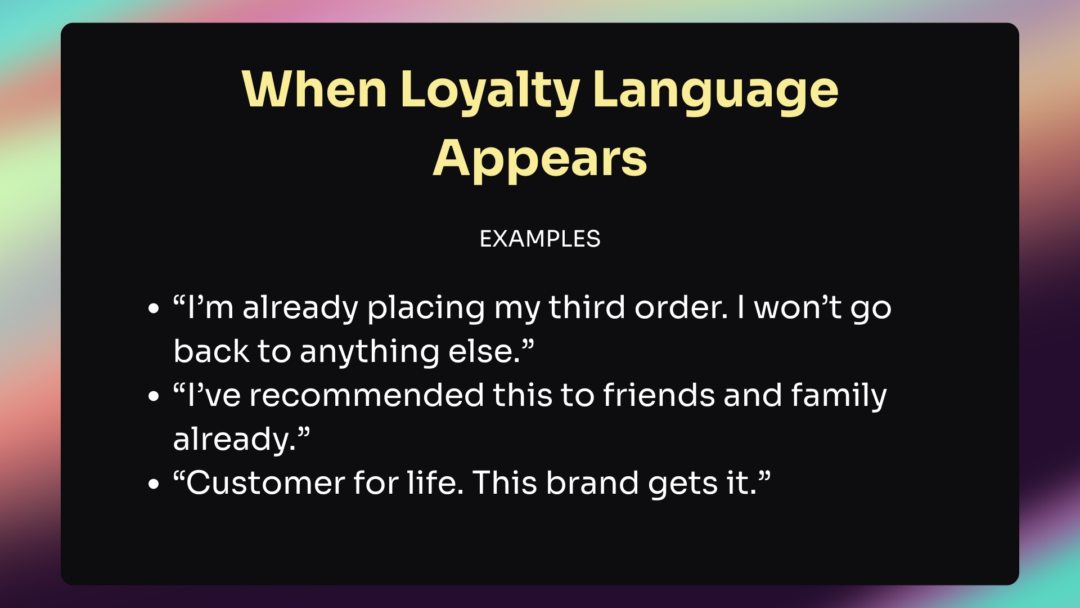
Reviews containing “ordering again,” “won’t use anything else,” or “customer for life” identify your most valuable customers. They’re already doing your marketing for free.
Don’t reward them with discounts. Reward them with access.
Create a simple “Super Fan” segment in your CRM. Email them personally (actually from a human, not automated) with this message: “We noticed you left an amazing review. Customers like you are why we do this. We’re launching [new product] next month—want early access?”
Include a private link and ask for their feedback. Make them feel like insiders.
The best loyalty programs are relational. Your biggest fans don’t want discounts. They want to feel special. They want to be part of the story. When you give them that, they’ll start recruiting others without being asked.
This is how brands grow through word-of-mouth instead of endlessly chasing new customers through paid acquisition.
Track Review Intelligence With Stamped
Implementing this playbook requires two things: enough review volume to spot patterns, and the tools to act on what you find.
Stamped helps you do both.
Our platform makes it easy to collect high-quality, high-volume reviews through automated email and SMS requests, optimized timing, and incentivized photo and video submissions. But collection is just the foundation.
With Stamped, you can:
- Ask custom questions in your review requests to collect structured feedback on the specific issues that matter to your business—fit accuracy, ease of use, results timeline, formula experience
- Access your complete review data to identify trends, track changes over time, and spot emerging friction before it becomes a pattern
- Display reviews strategically across your site to maximize conversion and help customers make confident purchase decisions
- Deploy reviews as marketing assets in email campaigns, social content, and paid advertising to amplify what’s already working
- Syndicate reviews to Google and Meta to build credibility across every customer touchpoint
The difference between brands that use reviews for social proof and brands that use reviews for competitive intelligence is execution. One group collects feedback and displays it. The other group acts on it.
Your customers are already telling you exactly what to fix, what to double down on, and where your biggest opportunities are hiding. The only question is whether you’re ready to stop analyzing and start acting.
Ready to turn feedback into action? Book a demo with Stamped to see how we help brands collect the volume and quality of reviews that make this level of business intelligence possible.
Related Articles

3 Ways to Use Reviews Before BFCM
Most brands see this pre-BFCM window as dead time—a period between now and the actual sale. They're wrong. This is your opportunity to build the trust infrastructure that converts BFCM traffic into sales when it arrives.
by Aiden Brady
BFCM
Reviews

Growth Hacking Reviews & Loyalty
Missed our DTCx webinar? Watch the recording and discover proven growth hacks to amplify your reviews, boost loyalty, and drive revenue for your eCommerce brand.
by Teala Beischer
Loyalty
Reviews

How to Spot Churn Risk Hidden in Customer Feedback
Customers telegraph their intention to churn long before they actually leave. You just have to know what to look for.
by Aiden Brady
Retention Marketing Strategies
Reviews