The Stamped blog
The 10 Review Signals Every Brand Should Look For
We asked 20 brands using Stamped if we could analyze their last 12 months of customer reviews using AI. What we found is exactly what we expected.
Customer Insights
Reviews
by Aiden Brady
Introduction
To prove that the intelligence hiding in review data could be extracted quickly and turned into actionable recommendations, we ran an experiment: we asked 20 brands using Stamped if we could analyze their last 12 months of customer reviews using AI.
What we found is exactly what we expected. Across industries—beauty, CPG, food & beverage, apparel, pet products, cleaning supplies—the same patterns kept appearing. Different products, different customers, but remarkably similar signals about what drives satisfaction, what causes friction, and where brands are leaving money on the table.
These were specific, recurring themes that appeared in thousands of reviews, each one revealing something critical about product performance, customer experience, or operational gaps.
Your reviews are more than testimonials. They’re a complete intelligence layer about your business. But most brands don’t know what to look for beyond star ratings and the occasional complaint.
Here are the 10 most important review signals we found across our analysis, and what they reveal about your business.
#1: The “Works/Doesn’t Work” Binary
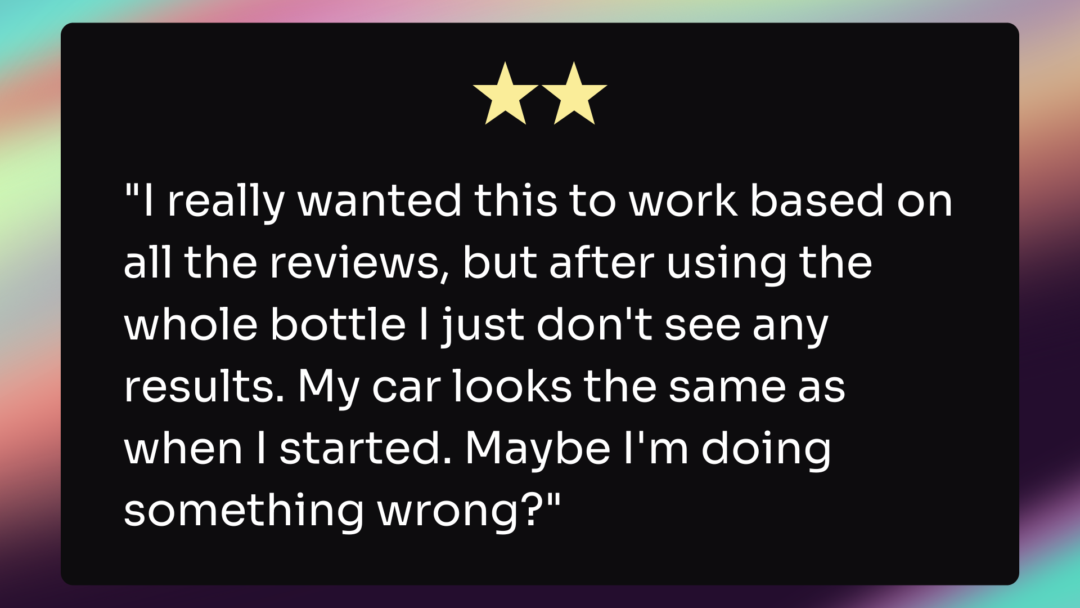
What it looks like: Customers use straightforward language about whether your product delivers its core promise. Phrases like “finally works,” “doesn’t work as advertised,” “exactly what I needed,” or “complete waste of money.”
Why it matters: This is the most fundamental signal. When customers say your product “works,” they’re confirming it solves the problem they bought it to solve. When they say it “doesn’t work,” everything else—your packaging, your shipping speed, your customer service—becomes irrelevant.
Example: A cleaning products brand found that 39% of reviews mentioned performance, and 25% of low-rated reviews specifically cited products “not working” as expected. These reviews revealed that when products delivered visible results, they drove 5-star ratings. When they didn’t, nothing else mattered.
What to do: Track the percentage of reviews mentioning efficacy or results. If “doesn’t work” language is climbing in low-rated reviews, you have a fundamental product problem that no amount of marketing can fix. If “works perfectly” dominates your 5-star reviews, double down on showcasing real results in your marketing.
#2: The Learning Curve Indicator
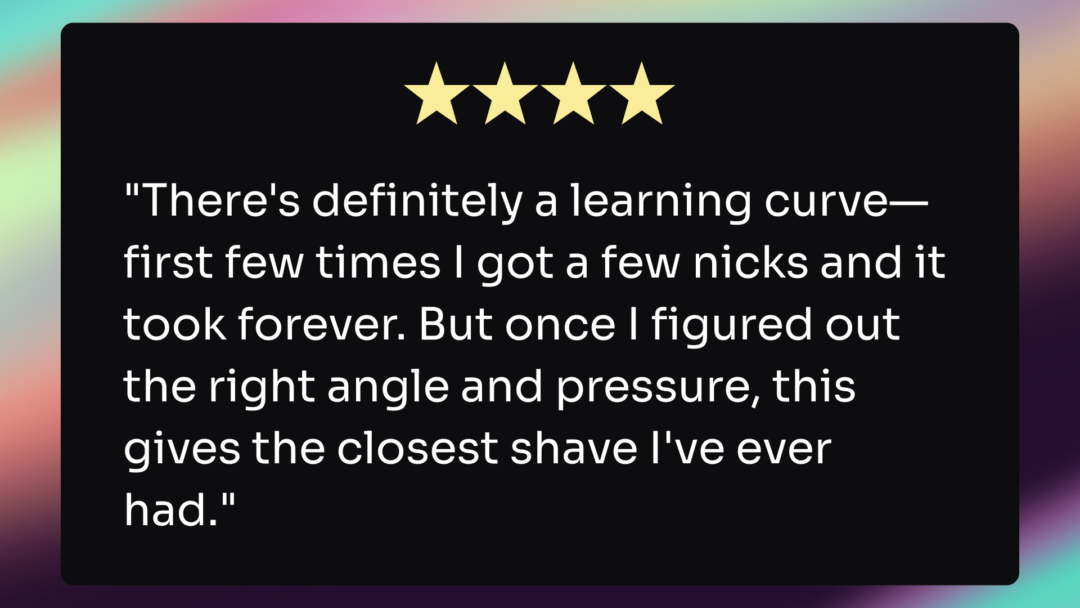
What it looks like: Reviews that mention “once you figure it out,” “takes practice,” “wish I’d known,” “instructions unclear,” or “easy once you get the hang of it.”
Why it matters: A steep learning curve doesn’t necessarily mean your product is bad, but it does mean you need better customer education. These reviews reveal the gap between customer expectations and the reality of using your product.
Example: A safety razor brand saw 13.6% of reviews mention a learning curve, with an average rating of 4.68 stars when positive. Customers who mastered the technique became evangelists. Those who struggled early gave up and left low ratings. The problem had nothing to do with the product itself.
What to do: If you see consistent “learning curve” language, create better instructional content: detailed setup guides, video tutorials, or even a follow-up email series that walks new customers through the first few uses. Turn your review comments into an FAQ that addresses common early frustrations. Better yet, leverage a Q&A function where customers can ask questions directly and past customers can answer.
#3: Subscription Friction Flags
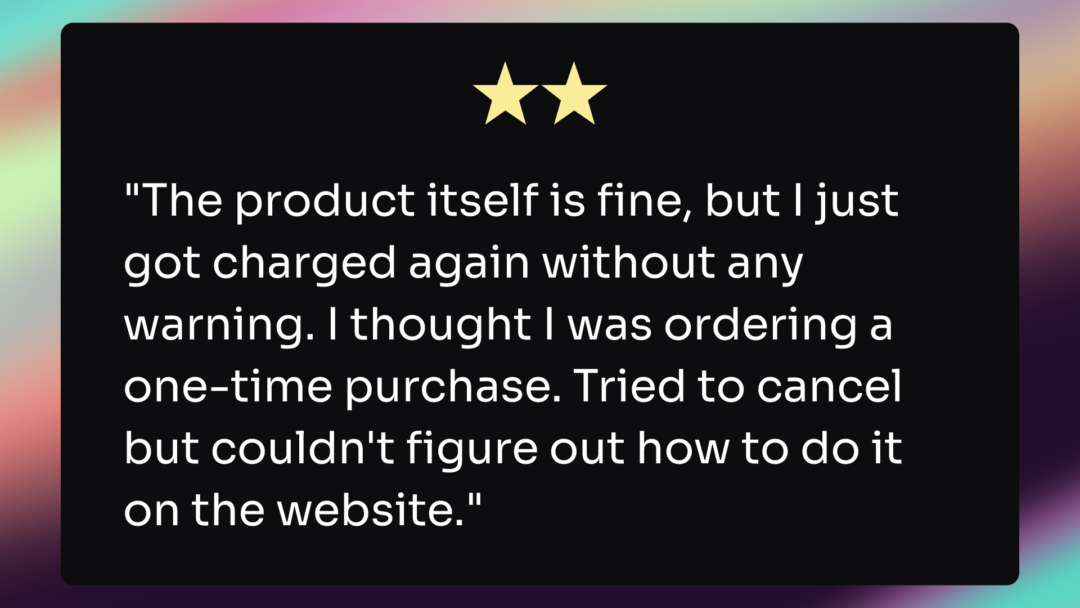
What it looks like: Mentions of “unexpected charge,” “couldn’t cancel,” “auto-renewed without warning,” “hard to skip,” “surprise shipment,” or “didn’t realize it was a subscription.”
Why it matters: Subscription friction appears in a small percentage of overall reviews but punches way above its weight in low-rated feedback. It’s one of the fastest ways to turn a happy customer into someone who feels tricked.
Example: A supplements brand found that subscription mentions appeared in only 9.7% of reviews but make up 27.1% of low-rated reviews. Post-BFCM, that number climbed to 32.4%. The complaints were about renewal surprises and difficulty modifying orders.
What to do: If subscription complaints are spiking, fix your communication flow immediately. Send pre-charge reminders, make skip/pause options more visible, and ensure your cancellation process is genuinely simple. If customers are being surprised by subscriptions (especially those who thought they made a one-time purchase), audit your product pages and cart flow to make subscription terms crystal clear at the point of purchase. These are quick fixes that prevent angry reviews before they happen.
#4: The Shipping Amplification Effect
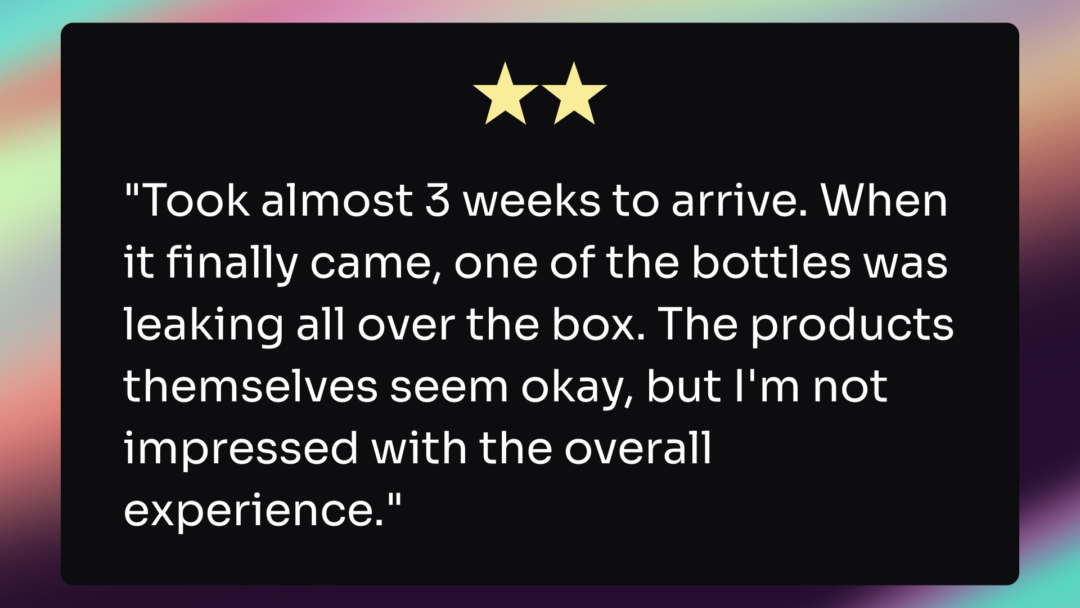
What it looks like: Reviews mentioning “late delivery,” “arrived damaged,” “never showed up,” “took forever,” or “packaging was terrible.”
Why it matters: Shipping problems rarely exist in isolation—they amplify other issues. A customer who loves your product will forgive a delayed shipment. A customer who’s already disappointed with the product will cite shipping as further evidence of a bad experience.
Example: A CPG brand found shipping mentioned in only 5.7% of reviews, but 16% of low-rated reviews. When shipping issues combined with product or packaging problems, they significantly amplified overall dissatisfaction.
What to do: Track shipping mentions in low-rated reviews specifically. If they’re overrepresented, audit your fulfillment process and carrier performance. More importantly, look at whether shipping complaints appear alone or alongside product issues. That tells you whether it’s a logistics problem or a compounding frustration.
#5: Fit and Sizing Dominance
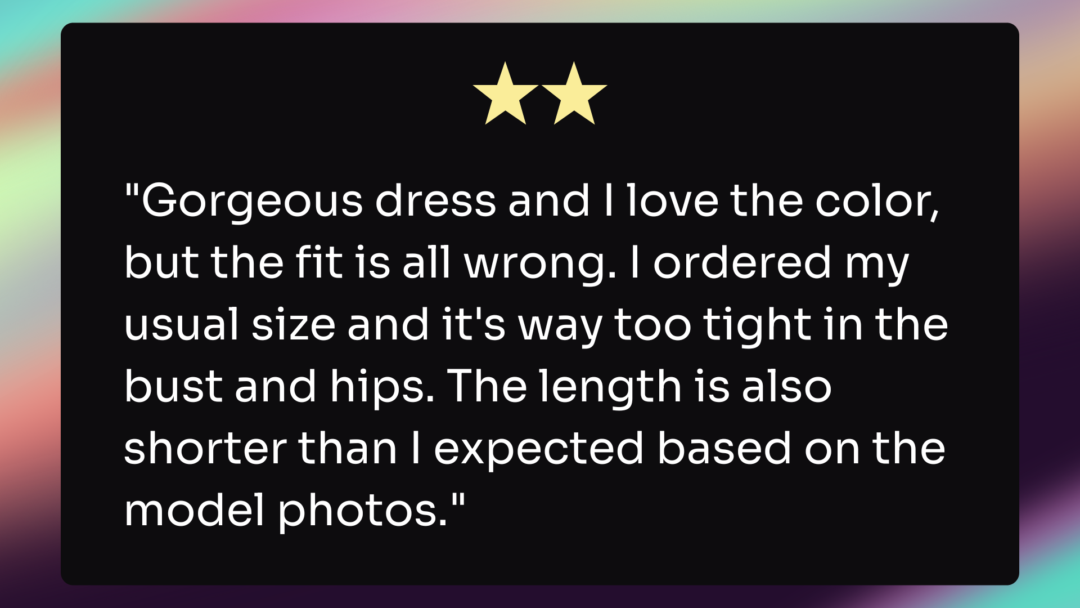
What it looks like: “True to size,” “runs small,” “size up,” “size down,” “perfect fit,” “too tight in the bust,” “length is off.”
Why it matters: For apparel brands, fit and sizing are the single strongest predictor of satisfaction. When customers get the fit right, they rave. When they don’t, nothing else about the dress—color, fabric, style—matters.
Example: A dress brand saw fit and sizing appear in 86.8% of all reviews and 88.7% of low-rated reviews. It was the dominant driver of both delight and dissatisfaction, making it the most critical lever for reducing returns and increasing satisfaction.
What to do: If fit issues dominate your low ratings, improve your sizing guides with specific measurements, add fit photos from real customers with different body types, and consider creating a size-recommendation quiz. Better yet, mine your reviews for the exact language customers use (“runs small in the bust,” “order up for hips”) and add those phrases to your product pages. You can also add custom questions to your review requests specifically asking about fit accuracy.
#6: The Expectation vs. Reality Gap
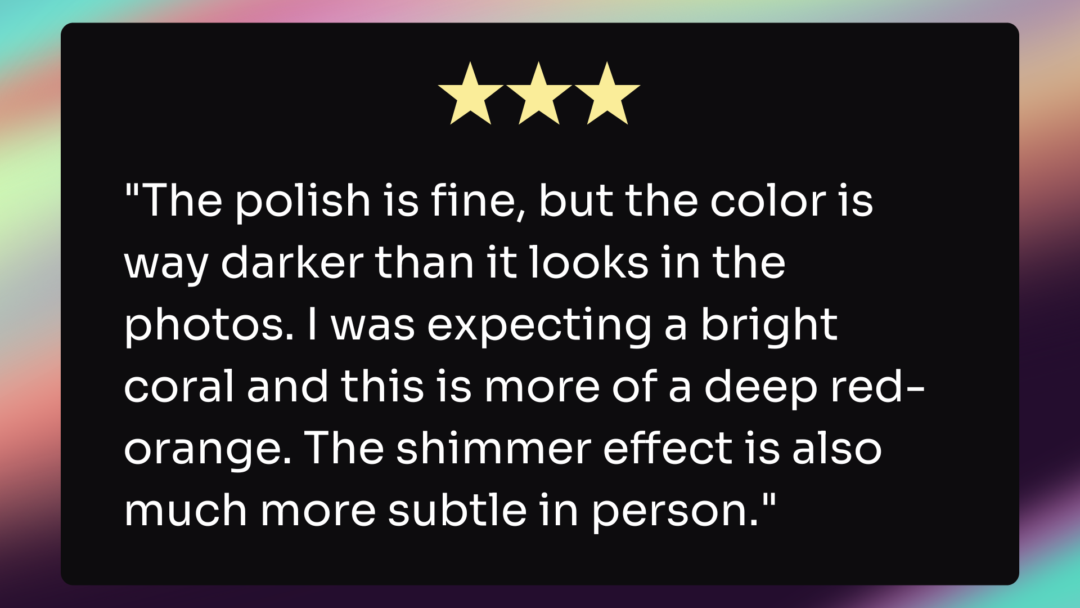
What it looks like: “Not what I expected,” “looks different than the photos,” “thought it would be bigger/smaller,” “darker/lighter than pictured,” “not as described.”
Why it matters: This signal reveals misalignment between your marketing and your product. You’re not necessarily selling a bad product, but you’re setting the wrong expectations. This is a communication problem, not a product problem.
Example: A nail polish brand found 63.5% of low-rated reviews mentioned color, effects, or shade mismatches. Customers were disappointed that shades looked darker than photos or effects appeared more subtle on their nails than in marketing images.
What to do: Audit your product photography, descriptions, and marketing claims against what customers say in reviews. If multiple people say “smaller than expected,” add size context to your photos (show it next to a common object). If colors look different in real life, add disclaimers about screen variations and include customer photos alongside professional shots. UGC shows real-world results and sets accurate expectations better than any professional photography can, so make it easy for customers to submit photos with their reviews.
#7: Gift Buyer Intelligence
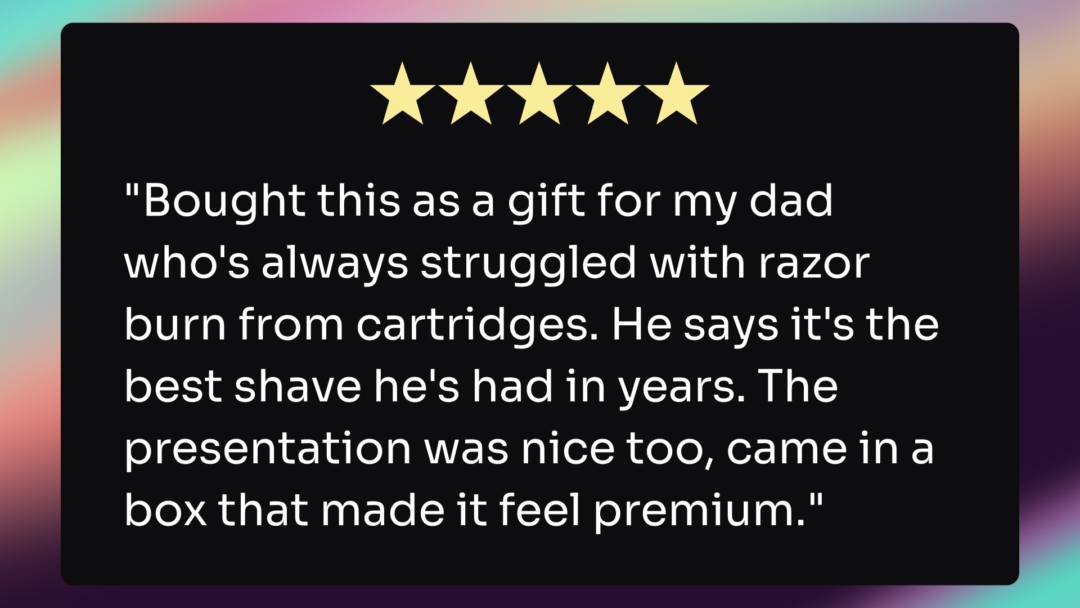
What it looks like: “Bought this for my mom,” “perfect gift for,” “gave this to my boyfriend,” “recipient loved it,” “great for someone who.”
Why it matters: Gift buyers are a distinct customer segment with different priorities than personal purchasers. They care more about presentation, ease of use, and whether the recipient will immediately appreciate it. When reviews reveal strong gift-buying patterns, you have an untapped marketing opportunity.
Example: A razor brand saw gifting and repeat purchase mentions in 10.3% of reviews with an average of 4.57 stars. The strong sentiment indicated built-in referral and retention potential, especially post-holiday periods.
What to do: If gift-giving language appears frequently, create gift-specific experiences: special packaging options, the ability to include personalized notes, gift messaging on product pages, and dedicated gift guides. Market directly to gift buyers with messaging that addresses their unique concerns.
#8: Formula, Texture, and Application Friction
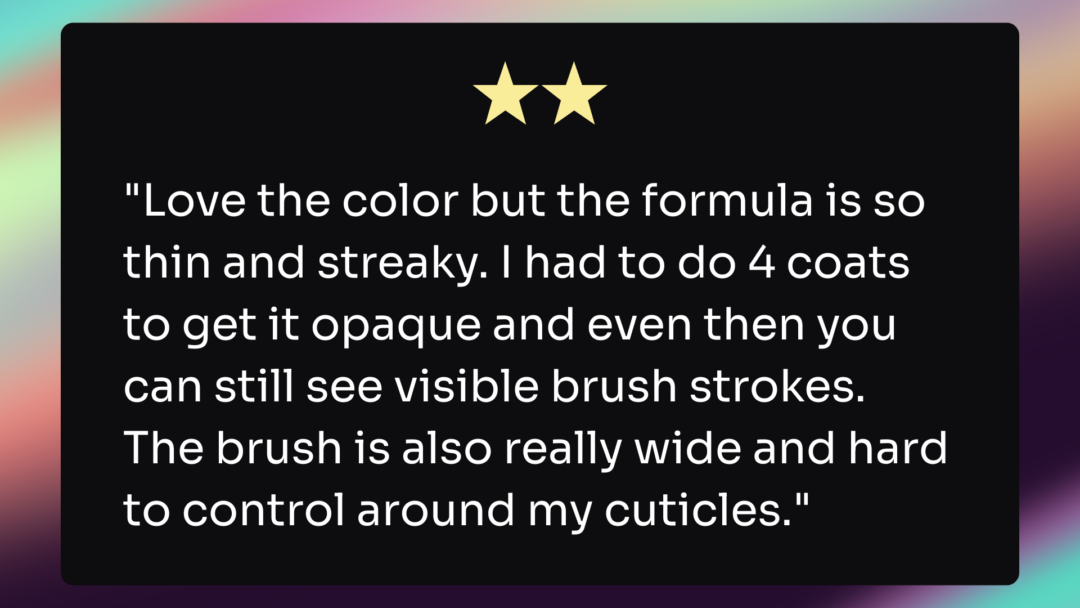
What it looks like: “Too thick,” “too thin,” “patchy,” “hard to apply,” “dries too fast,” “clumps,” “difficult to spread,” “messy.”
Why it matters: For any product with a formula or texture component (beauty, food, supplements, cleaning products), application experience is make-or-break. When the physical experience of using your product is frustrating, customers won’t repurchase no matter how well it works.
Example: A nail polish brand found formula and application mentioned in 46.4% of all reviews and 68.2% of low-rated reviews. Customers described polishes as “too thin and patchy” requiring 3-4 coats, or “too thick and goopy.” When formulas self-leveled and reached opacity in 1-2 coats, it became a major delight driver.
What to do: If texture and application issues appear frequently, you have a product formulation problem that requires R&D attention. In the short term, create application guides and tips. Long term, reformulate or provide tools (better applicators, scoops, brushes) that improve the user experience.
#9: Operational Friction That Amplifies Everything
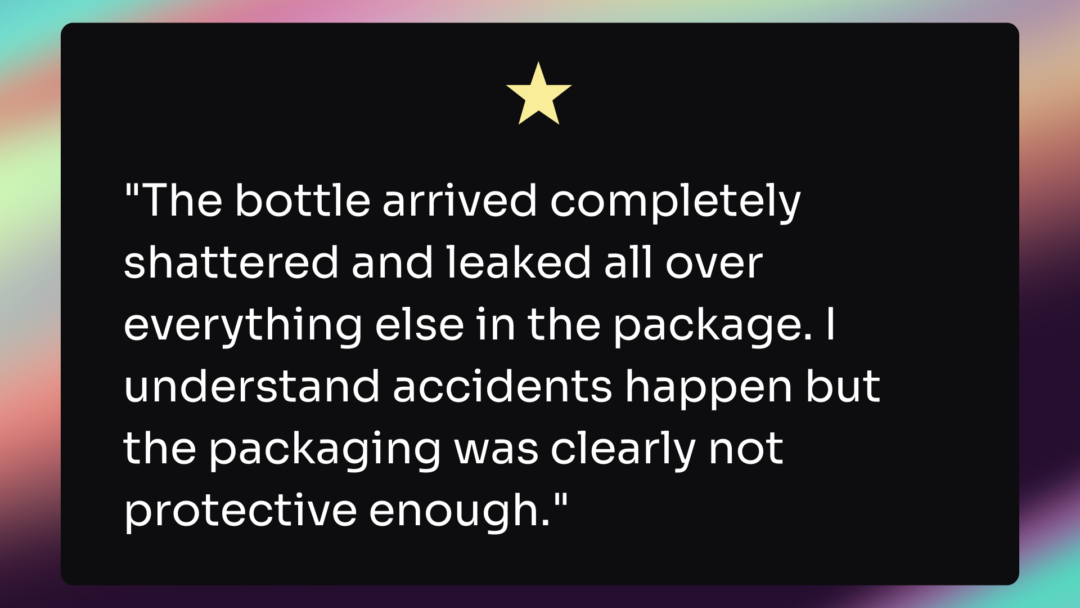
What it looks like: “Order was wrong,” “missing items,” “damaged packaging,” “leaking bottles,” “broken seals,” “pieces didn’t come.”
Why it matters: Operational issues appear in a small percentage of reviews but carry disproportionate negative weight. A customer who receives a damaged or incomplete order might feel like the brand doesn’t care about quality control.
Example: A CPG brand saw packaging, leaks, and damage mentioned in only 11.7% of reviews but 27.5% of low-rated reviews. When bottles leaked or arrived damaged, these operational failures drove some of the harshest negative sentiment despite being a minority of orders.
What to do: Even if operational issues affect a small percentage of customers, they create outsized negativity. Audit your packaging, quality control, and fulfillment process. Sometimes the fix is as simple as better seals, stronger boxes, or additional protective wrapping.
#10: The Loyalty and Repurchase Signal
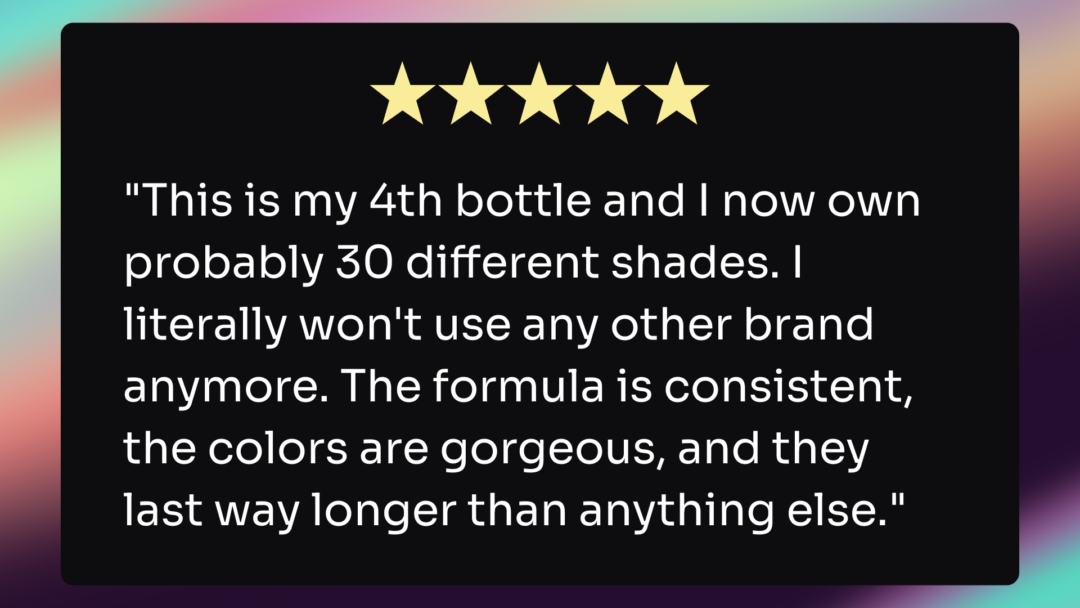
What it looks like: “Ordering again,” “bought my second/third,” “recommend to everyone,” “won’t use anything else,” “customer for life,” “entire collection.”
Why it matters: These reviews identify your most valuable customers—the ones who will drive lifetime value and refer others. They’re telling you what creates loyalty and what keeps them coming back.
Example: A nail polish brand found 7.7% of reviews contained explicit repurchase and collection-building language. Customers talked about owning full collections, buying gifts, and planning to buy more shades. This indicates a strong fan base ready to be activated with retention campaigns.
What to do: Segment customers who leave loyalty language in reviews and create a VIP program or exclusive access to new products. Offer exclusive experiences like early product launches, behind-the-scenes content, or invitations to product testing and survey opportunities where they can influence what you build next. Use their exact language in retention marketing. Ask them for referrals. These customers are your brand evangelists, so give them reasons to keep talking about you.
From Signals to Strategy
The smartest brands systematically look for these signals, track how they change over time, and act on what they find.
This is what separates brands that use reviews as a conversion tool from brands that use reviews as business intelligence. One approach puts star ratings on product pages. The other approach uses customer feedback to make smarter decisions across product development, marketing, operations, and customer experience.
The intelligence is already there in your reviews. You just have to know what to look for.
Track Review Signals With Stamped
Turning reviews into actionable intelligence only works if you’re collecting enough volume and detail to identify meaningful patterns. That’s what Stamped helps brands do.
Our platform makes it easy to build review volume through automated email and SMS campaigns, optimized request timing, and incentivized photo and video submissions. But collection is just the foundation.
With Stamped, you can:
- Collect detailed insights with custom review forms that ask the specific questions your business needs answered
- Access your complete review data to analyze patterns, track trends over time, and identify the signals that matter most
- Display reviews strategically across your site to maximize on-site conversion
- Deploy reviews as marketing assets in email campaigns, social content, and paid advertising
- Syndicate reviews to Google and Meta to amplify credibility across channels
The brands seeing the biggest impact are the ones using reviews as both a conversion tool and a strategic intelligence source. They’re mining customer feedback for insights that shape every part of their business.
Your customers are already telling you exactly what’s working, what’s broken, and what needs to change. The question is whether you’re listening, and more importantly, whether you’re acting on what you hear.
Ready to turn customer feedback into competitive advantage? Book a demo with Stamped to see how we help brands collect the volume and quality of reviews that make this level of intelligence possible.
Related Articles

The Hidden Data Layer Inside Your Reviews
Your reviews contain a complete intelligence layer about your business that you're not tapping into.
by Aiden Brady
Reviews

Best Ways to Optimize Your Review Request Emails
Maximize your review response rates with a well optimized review request sequence. Discover the best timing, frequency, and subject line strategies to ensure your review requests stand out and convert.
by Aiden Brady
Reviews

Stamped Loyalty 2.0: What’s New in Analytics
Discover Stamped Loyalty 2.0 with a new Analytics dashboard to track ROI, boost retention, and optimize your loyalty program for growth.
by Sammi Wong
Customer Insights
Loyalty