The Stamped blog
How to Spot Churn Risk Hidden in Customer Feedback
Customers telegraph their intention to churn long before they actually leave. You just have to know what to look for.
Retention Marketing Strategies
Reviews
by Aiden Brady

TLDR: Customers don’t just disappear; they telegraph churn weeks before they leave through their reviews. Eight key signals predict risk: past satisfaction turning to disappointment, conditional loyalty (“love it but…”), subscription fatigue, competitor comparisons, diminishing results, service frustrations, silent indifference, and price anxiety. The best part? You can use AI prompts (ChatGPT, Claude) to scan your reviews and identify at-risk customers in minutes instead of manually reading thousands of reviews. Catch these signals early, and you can save customers before they churn. Ready to collect review data that predicts churn? Book a demo with Stamped to see how.
Introduction
Most brands only notice churn after it’s already happened. A customer stops buying, unsubscribes, or quietly disappears from your email list. By the time you realize they’re gone, it’s too late to win them back.
But here’s what most merchants miss: customers telegraph their intention to churn long before they actually leave. They do it in their reviews, their support tickets, and their feedback. You just have to know what to look for.
We recently analyzed thousands of customer reviews across multiple brands and found consistent patterns that predict churn risk. Customers don’t just wake up one day and decide to leave. They experience a series of small disappointments, unmet expectations, or friction points that accumulate until they finally give up on your brand.
The good news is that these warning signs appear in your review data weeks (or even months) before customers actually churn. And with AI tools like ChatGPT, you can identify at-risk customers with the right prompts instead of manually reading through thousands of reviews.
This guide will show you exactly what churn signals look like in customer feedback, why they matter, and how to use AI to find them before it’s too late.
The 8 Churn Risk Signals Hiding in Your Reviews
1. The “Used to Love” Signal
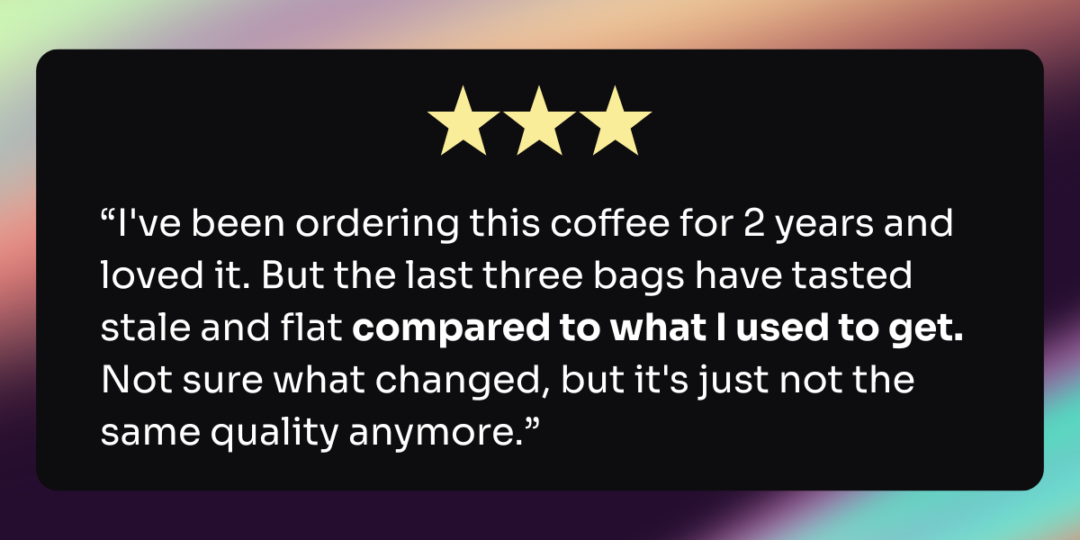
What it looks like: Reviews that start positive but shift to disappointment. Language like “used to be great,” “not like it used to be,” “quality has gone downhill,” “disappointing compared to my first order.”
Why it predicts churn: These customers have already experienced your product at its best. They know what you’re capable of, which makes current disappointment even more acute. They’re comparing present reality to past excellence—and finding you lacking.
AI Prompt to find this signal:
Analyze these reviews and identify customers who mention past positive experiences but current disappointment. Look for phrases like “used to,” “not anymore,” “has changed,” “disappointing compared to before,” or similar language indicating declining satisfaction. For each customer, provide: (1) their specific complaint, (2) how long they’ve been a customer based on their language, (3) the severity of their disappointment, (4) rank them in order of estimated churn risk so I can prioritize outreach.
What to do: These are your highest-priority saves. They already loved you once; you just need to figure out what changed and fix it. Reach out personally, acknowledge the quality shift, and offer to make it right with a replacement or refund. If you’ve genuinely fixed the underlying issue, tell them exactly what you changed.
2. The Conditional Loyalty Signal
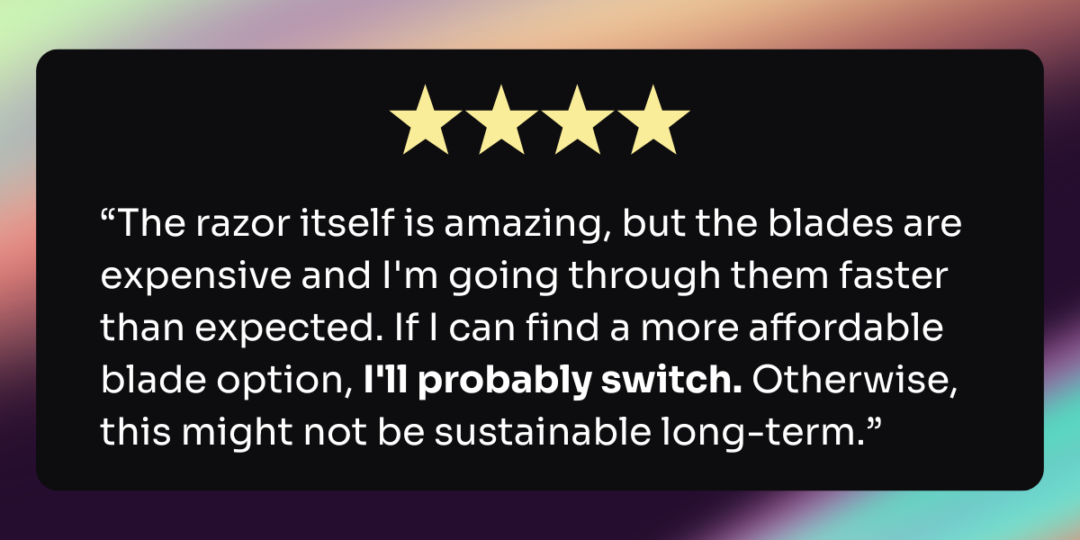
What it looks like: Reviews that express satisfaction but include qualifiers: “great product but,” “would repurchase if,” “love it except,” “only problem is,” “perfect except for.”
Why it predicts churn: These customers are one bad experience away from leaving. They’re already mentally shopping for alternatives and have identified the specific deal-breaker that would make them switch.
AI Prompt to find this signal:
Identify reviews that express overall satisfaction but include conditional statements or deal-breakers that might cause customers to leave. Look for “but,” “except,” “only problem,” “wish,” “would be perfect if,” or “if only.” For each review, extract: (1) what they love, (2) their specific deal-breaker, (3) whether they mention alternatives or comparison shopping, (4) how close they seem to churning based on their language.
What to do: Address the specific condition before they leave. If it’s price, offer a discount or consider creating a bundle or subscription option that improves perceived value. If it’s a missing feature, consider adding it to your roadmap and thank them for the suggestion If it’s an operational issue, show them you’re fixing it. These customers are telling you exactly what would keep them. Evaluate whether it’s feasible and, if so, do it.
3. The Subscription Fatigue Signal
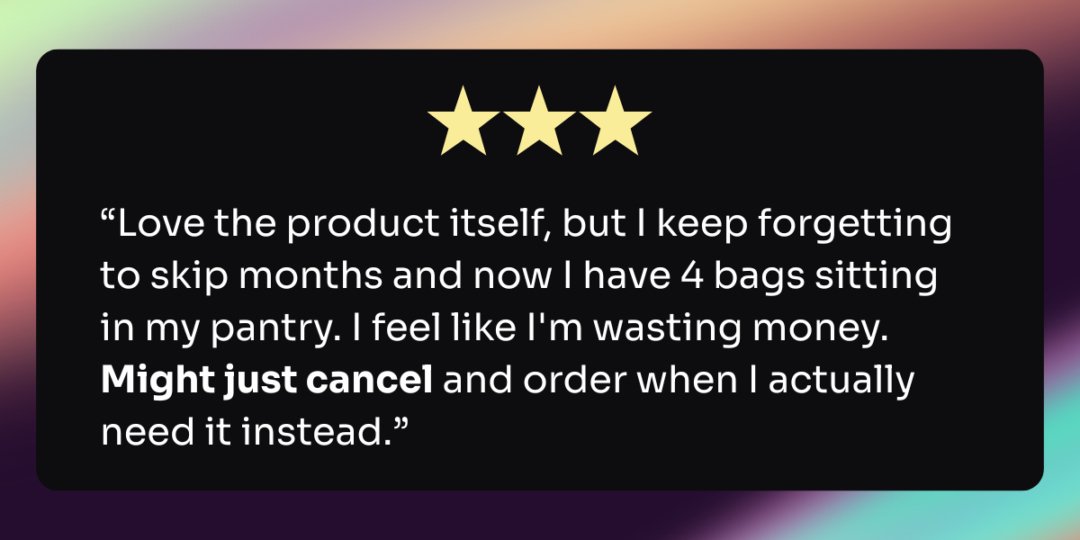
What it looks like: Reviews mentioning subscription frequency issues, products piling up, forgetting to skip or reschedule shipments, feeling locked in, or difficulty managing deliveries.
Why it predicts churn: Subscription fatigue is the #1 predictor of churn for subscription brands. When customers feel like they’re drowning in product or fighting with your system to pause/skip, they’ll cancel rather than deal with the hassle.
AI Prompt to find this signal:
Find reviews from subscription customers mentioning frequency problems, product accumulation, difficulty managing their subscription, or frustration with auto-renewals. Look for phrases like “too often,” “piling up,” “forget to skip,” “can’t pause,” “too much product,” “waste,” or “cancel.” For each customer, identify: (1) their specific subscription pain point, (2) whether they’ve already taken action to change/cancel, (3) their satisfaction with the actual product vs. the subscription experience.
What to do: Proactively reach out before they cancel. Offer to adjust frequency, skip upcoming orders, or switch to on-demand purchasing. Audit your subscription renewal flows to ensure customers have clear visibility and control. Include more education on your site and in email communications about how to manage subscriptions easily. Send automated “subscription health checks” to customers showing signs of accumulation: “Do you need to adjust or pause any upcoming deliveries?” Make subscription management effortless or lose these customers.
4. The Comparison Shopping Signal
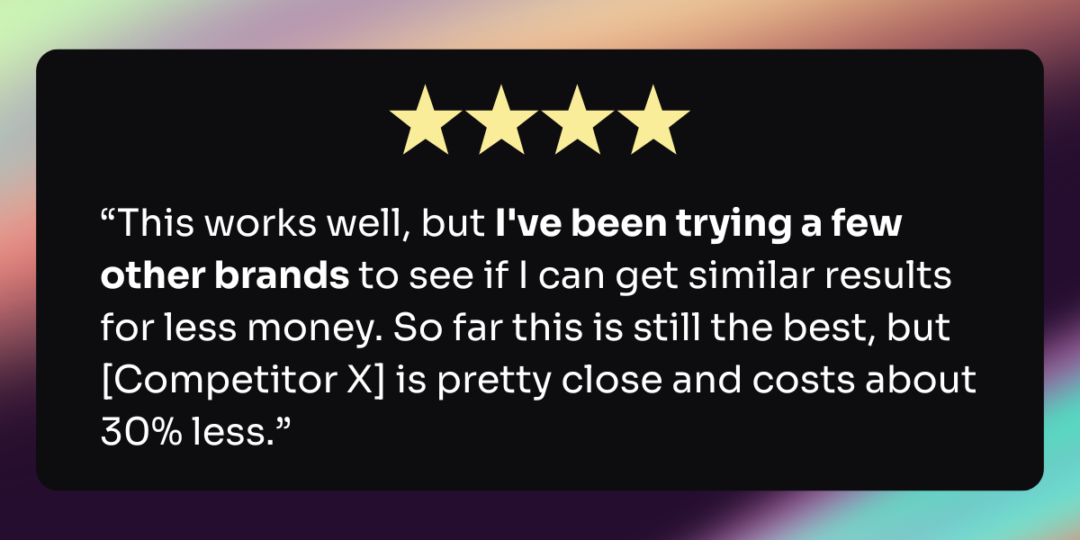
What it looks like: Reviews that mention trying competitors, exploring alternatives, or making active comparisons. Language like “also tried,” “compared to,” “thinking about switching to,” “others work just as well.”
Why it predicts churn: These customers are already in the market for alternatives. They’re actively evaluating whether another brand might serve them better. Once they find something that works, they’re gone.
AI Prompt to find this signal:
Identify reviews where customers mention trying, comparing, or considering competitor products or alternatives. Look for competitor brand names, phrases like “also using,” “testing,” “comparing to,” “might switch,” “trying other,” or “shopping around.” For each review, extract: (1) which competitors they’re considering, (2) what’s driving their comparison shopping (price, features, results), (3) how close they are to switching based on their language, (4) what’s currently keeping them with you.
What to do: Win them back before they fully commit to a competitor. If price is the driver, offer competitive pricing. If features are the issue, highlight what you have that competitors don’t. If results are comparable, lean into service, community, or brand values. Give them a reason to stop shopping around.
5. The Diminishing Results Signal
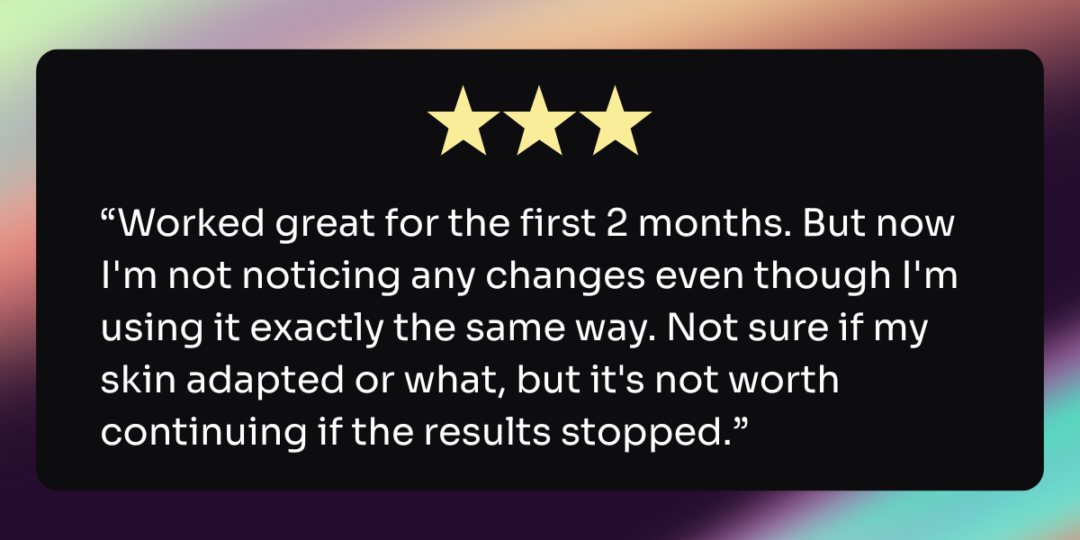
What it looks like: Reviews mentioning that products “stopped working,” “not as effective as it used to be,” “results plateaued,” “used to see better improvement,” “tolerance built up.”
Why it predicts churn: When customers stop seeing results, nothing else matters. They’re buying your product to solve a problem; if it’s no longer solving that problem, they’re gone.
AI Prompt to find this signal:
Find reviews mentioning diminishing results, plateau effects, or products that “stopped working” over time. Look for phrases like “not as effective,” “stopped seeing results,” “worked at first but,” “no longer working,” “plateau,” “tolerance,” or “diminishing returns.” For each customer, identify: (1) how long they used the product before results diminished, (2) what results they were expecting vs. experiencing, (3) whether they mention trying different usage methods, (4) their likelihood of repurchasing.
What to do: Set better expectations upfront about result timelines and what the “maintenance phase” looks like. For customers experiencing this, reach out with usage optimization tips, product rotation strategies, or complementary products that reignite results. Consider implementing a cross-sell flow, especially if your product has a natural “expiry” date of usefulness. Education saves these customers—they need to understand that plateaus are normal and manageable.
6. The Customer Service Disappointment Signal
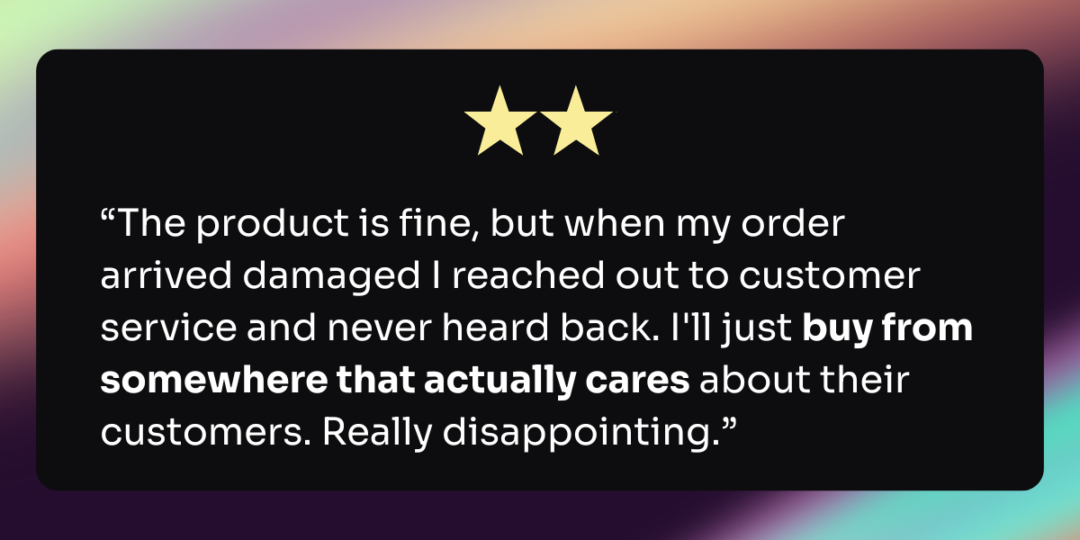
What it looks like: Reviews mentioning poor support experiences, unresolved issues, slow response times, or feeling unheard. Language like “no response,” “still waiting,” “refused to help,” “disappointing service,” “couldn’t get anyone to care.”
Why it predicts churn: A bad product experience can be forgiven. A bad service experience rarely is. When customers feel ignored or dismissed, they actively warn others away.
AI Prompt to find this signal:
Identify reviews mentioning negative customer service experiences, unresolved issues, or support frustrations. Look for phrases like “customer service,” “no response,” “still waiting,” “didn’t help,” “refused,” “ignored,” “poor support,” or “can’t get help.” For each review, extract: (1) the specific service failure, (2) whether the issue was ever resolved, (3) the customer’s emotional tone (frustrated, angry, resigned), (4) whether they explicitly mention not repurchasing.
What to do: Immediate damage control. Escalate every one of these to your service team within 24 hours. Reach out personally (not automated), apologize genuinely, and solve the problem immediately. Think of each customer as a micro-influencer; they’ll tell everyone about how you failed to solve their issues. Make it right and turn them into stories of redemption instead.
7. The Silent Disappointment Signal
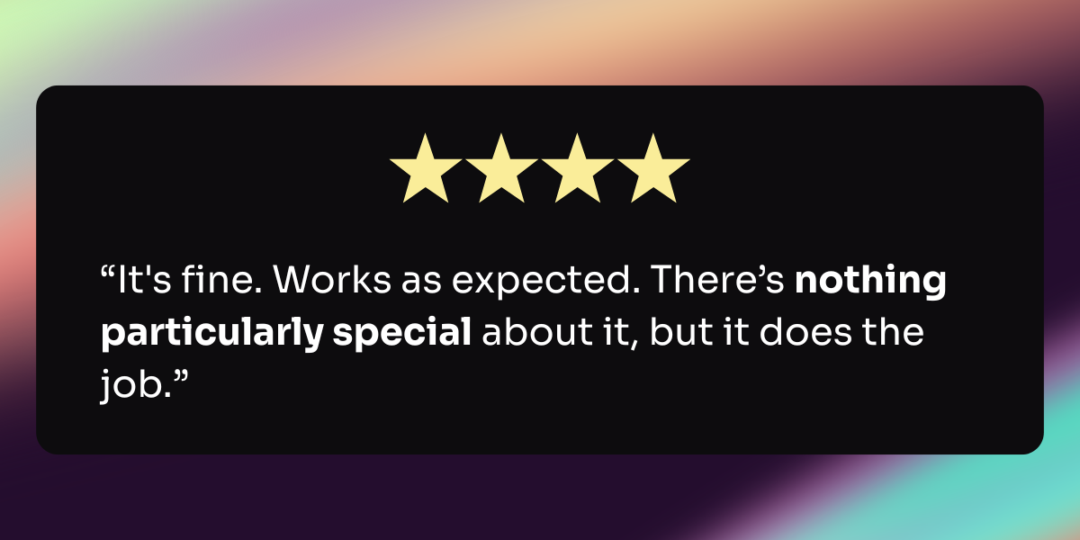
What it looks like: Reviews that are technically positive (3-4 stars) but lack enthusiasm, specificity, or emotional language. Short reviews like “It’s fine,” “Does what it says,” “Okay,” “Nothing special,” “Adequate.”
Why it predicts churn: These customers aren’t angry, but their indifference is just as dangerous. They’ll be easily swayed by sales, ads, or recommendations from friends. There’s no emotional attachment keeping them with your brand.
AI Prompt to find this signal:
Analyze 3-4 star reviews and identify ones that lack enthusiasm, specificity, or emotional language. Look for short reviews (under 50 words) with tepid language like “fine,” “okay,” “decent,” “adequate,” “nothing special,” “does the job,” or reviews that feel obligatory rather than enthusiastic. Compare these to other 3-4 star reviews that include specific details and genuine excitement. Flag customers whose reviews suggest indifference rather than satisfaction.
What to do: These customers need re-engagement. Send a personalized follow-up: “We noticed you gave us 4 stars—we’re grateful, but we want to earn that 5th star. What would make [product] exceptional for you instead of just ‘fine’?” Consider creating different branches in your post-review flow based on star ratings. Use their feedback to improve, then invite them to try an upgraded experience that might create actual excitement.
8. The Value Justification Struggle Signal
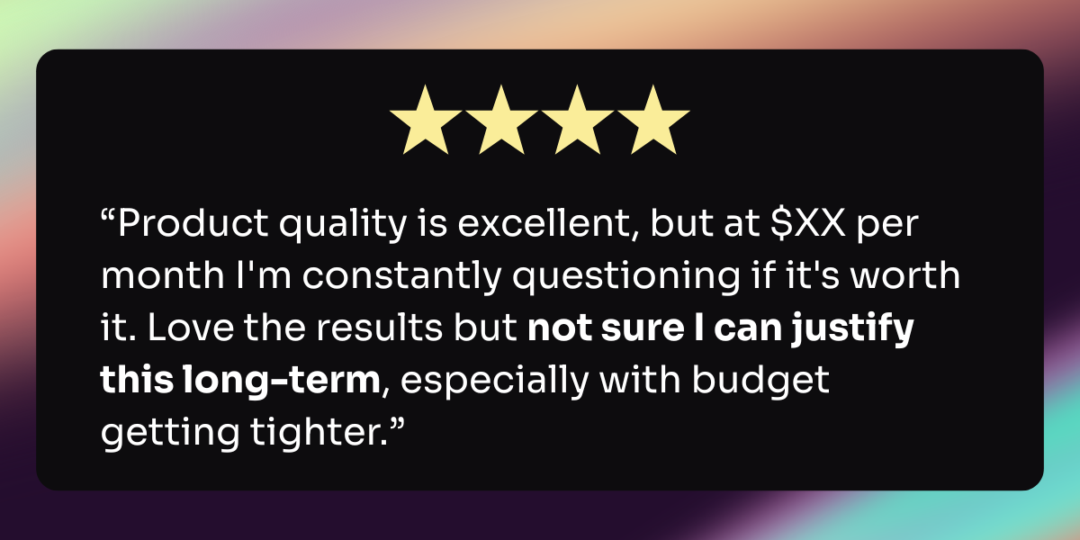
What it looks like: Reviews that mention price repeatedly, calculate cost-per-use, compare to cheaper alternatives, or express hesitation about reordering due to cost.
Why it predicts churn: These customers are actively trying to justify the expense to themselves. When they can’t make the math work anymore, or when a competitor offers similar value at lower cost, they’ll leave.
AI Prompt to find this signal:
Find reviews where customers mention price concerns, value justification, cost calculations, or budget constraints—even in otherwise positive reviews. Look for phrases like “expensive,” “costs too much,” “not sure it’s worth,” “budget,” “cheaper alternatives,” “hard to justify,” “doing the math,” or “price is steep.” For each customer, identify: (1) whether they’re satisfied with the product despite price concerns, (2) what would improve value perception, (3) how close they are to churning over cost, (4) whether they mention competitor pricing.
What to do: Improve value perception or give them financial flexibility. Introduce loyalty pricing, annual subscriptions with discounts, referral credits, or bulk purchase options. Show cost-per-use compared to alternatives. Demonstrate ROI beyond the product itself (time saved, other expenses reduced, long-term benefits). Make the price make sense emotionally, not just rationally.
How to Use AI to Find Churn Risk in Minutes
You don’t need a data science team to identify these signals. Here’s exactly how to use AI tools like ChatGPT to surface churn risk:
Step 1: Export Your Review Data
Export your last 12 months of reviews including:
- Review text
- Star rating
- Customer name/ID
- Product purchased
- Review date
- Customer email (if available for outreach)
Save as CSV or copy into a text document.
Important note on data privacy: Be cautious about uploading personally identifiable information (PII) such as customer names and email addresses to AI tools. Check your local data protection regulations (GDPR, CCPA, etc.) and consider anonymizing customer data before analysis.
Step 2: Upload to ChatGPT
Use your LLM of choice (e.g. ChatGPT or Claude) with file upload capabilities. Upload your review data and start with a broad prompt:
I’m uploading customer review data from the past year. I want to identify customers at high risk of churning based on warning signs in their feedback. Please analyze these reviews and categorize churn risk signals into: (1) high risk – likely to churn soon, (2) medium risk – at risk but savable, (3) low risk – minor concerns. For each risk category, provide specific customer examples and the exact language indicating risk.
Step 3: Run Targeted Prompts for Each Signal
Use the specific AI prompts provided in each churn signal section above. Run them individually to get detailed insights on each risk type.
Collect High-Quality Reviews with Stamped
Everything in this guide depends on having detailed, honest review data to analyze. That’s where Stamped helps.
Our platform makes it easy to:
- Collect high-volume reviews through automated campaigns with optimized timing that actually gets responses
- Capture detailed feedback with custom review forms that surface the specific concerns predicting churn
- Access your complete review data for analysis, pattern identification, and early warning systems
- Identify at-risk customers through review sentiment and language patterns
- Act on feedback quickly with integrations that alert your team when churn signals appear
Ready to turn customer feedback into retention wins? Book a demo with Stamped to see how we help brands catch churn risk before it costs them customers.
Related Articles

4 Emails That Get BFCM Buyers to Order Again
The brands that scale into 7 and 8 figures are the ones that know how to take that once-a-year flood of bargain hunters and transform them into year-round, loyal customers. The secret weapon? Strategic email flows designed specifically for post-BFCM lifecycle marketing.
by Aiden Brady
BFCM
Retention Marketing Strategies

How to Use Lifecycle to Capture Post-Purchase Momentum
Post-purchase momentum is critical. That window immediately following a purchase is when customers are most engaged with your brand, most satisfied with their decision, and most receptive to continued communication.
by Aiden Brady
Lifecycle
Retention Marketing Strategies

Complete Guide to Customer Engagement (In Every Stage of the Funnel)
Discover how effective customer engagement drives brand awareness, loyalty, profitability, and growth. Learn best practices to create meaningful customer relationships.
by Teala Beischer
Loyalty
Retention Marketing Strategies