The Stamped blog
How Customer Feedback Can Predict Repeat Purchase Behavior
Reviews are more than just their star rating: Star ratings tell you satisfaction level. Review language tells you future intent. Brands not only need to know how to identify these seven review signals that predict repeat purchases, but how to action them.
Customer Insights
Reviews
by Aiden Brady

Introduction
Most brands measure repeat purchase rate as a lagging indicator. They wait 60, 90, or 120 days to see if customers come back. By the time the data shows someone isn’t reordering, you’ve already lost them.
But what if you could predict repeat purchase behavior weeks before the next order window? What if the reviews customers leave after their first purchase told you whether they’d buy again?
As you’ve probably guessed by now—they do.
After analyzing thousands of reviews across multiple brands and tracking subsequent purchase behavior, we’ve found that specific language patterns in first-order reviews predict repeat purchase rates with remarkable consistency. Customers who use certain words, mention particular experiences, or frame their feedback in specific ways repurchase at 2-3x the rate of customers who don’t.
This isn’t sentiment analysis. A 5-star review doesn’t automatically mean repeat purchases, and a 3-star review doesn’t automatically mean customer churn. The predictive signals are more nuanced than star ratings; they’re buried in what customers actually say and how they say it.
This guide shows you exactly which review signals predict repeat purchase behavior, why they work, and how to use this intelligence to drive retention at scale.
Why Review Language Predicts Better Than Star Ratings
Star ratings tell you satisfaction level. Review language tells you future intent.
A customer might leave a 5-star review saying “Great product, works as described.” That’s positive sentiment, but it doesn’t indicate loyalty. It indicates satisfaction with a one-off transaction.
Another customer leaves a 5-star review saying “This is exactly what I’ve been looking for. Already planning to stock up.” That’s beyond typical satisfaction; it’s commitment to a future purchase.
Similarly, a 4-star review saying “Love this but wish it came in more colors” predicts higher repeat purchase than a 5-star review saying “It’s fine, does what it says.” The 4-star review shows engagement and investment. The 5-star review shows indifference.
The language customers use reveals:
- Time horizon: Are they thinking about one purchase or ongoing use?
- Emotional investment: Do they care enough to want improvements?
- Identity alignment: Do they see themselves as “a [your brand] customer”?
- Problem urgency: Is this solving an acute need or a nice-to-have?
- Alternative awareness: Are they comparing or committed?
These psychological factors predict behavior better than satisfaction scores because repeat purchase is driven by commitment, not contentment.
The 7 Review Signals That Predict High Repeat Purchase
Signal #1: Future-Tense Language
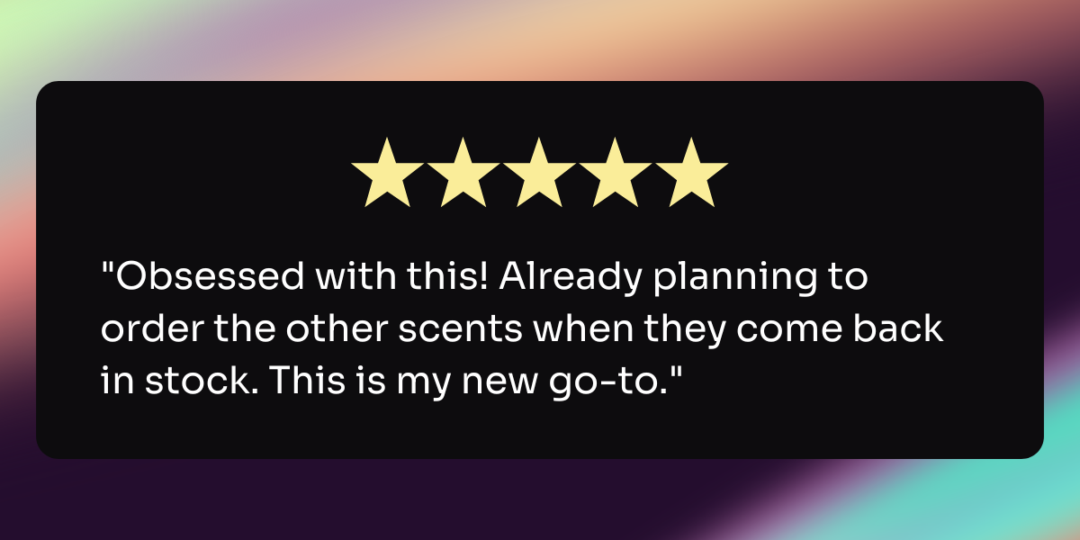
What it looks like: “Will definitely order again,” “Can’t wait to try other products,” “Planning to stock up,” “Going to subscribe,” “Next time I’ll get,” “Already added to my reorder list.”
Why it predicts repeat purchases: Future-tense language is customers making a public commitment. They’re mentally scheduling their next purchase. Writing “will order again” in a review creates psychological consistency pressure to actually follow through.
What to do with this signal:
- Tag these customers as “High Intent – Future Purchase”
- Send them targeted emails featuring the products they mentioned
- Give them early access to restocks or new launches they referenced
- Include them in beta programs or VIP previews
- Track whether their stated intent matches actual behavior (this validates your tagging)
Signal #2: Collection-Building Mentality
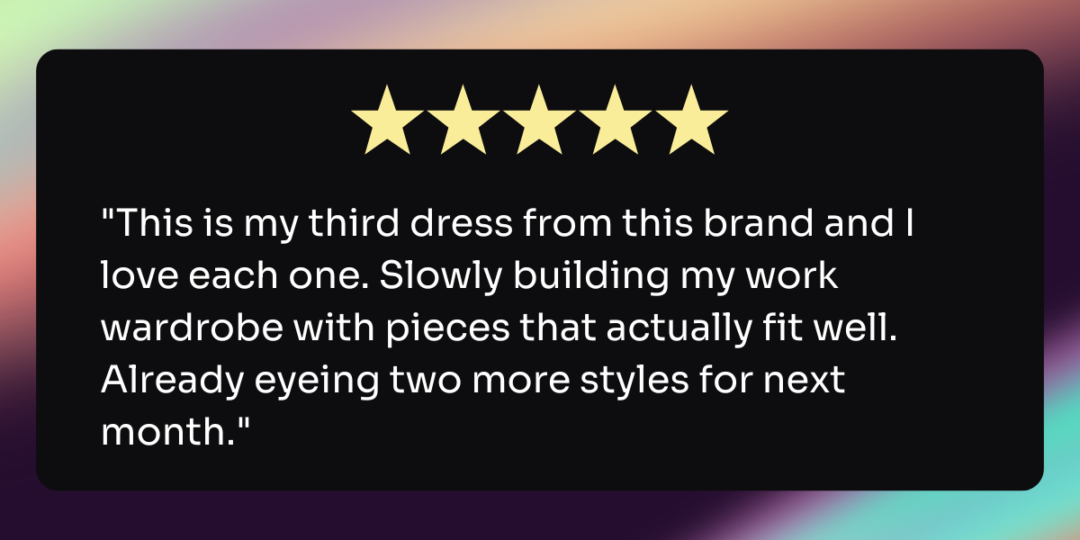
What it looks like: “Adding to my collection,” “Now I own three of these,” “Completing the set,” “Got one in every color,” “Building my [product category] wardrobe,” “This is my fourth one.”
Why it predicts repeat purchases: Collection-building customers don’t see your product as a one-time purchase. They see it as part of a larger system they’re assembling. Each purchase reinforces their identity as a collector, creating momentum for continued buying.
What to do with this signal:
- Create a “Collector’s Track” email series showcasing complete collections
- Offer bundle discounts that encourage completing sets
- Send “You’re X away from completing [collection]” emails
- Give collectors early access to new releases (they’ll buy immediately)
- Feature their collections in UGC campaigns (social validation increases collecting behavior)
Signal #3: Problem-Solution Fit Confirmation
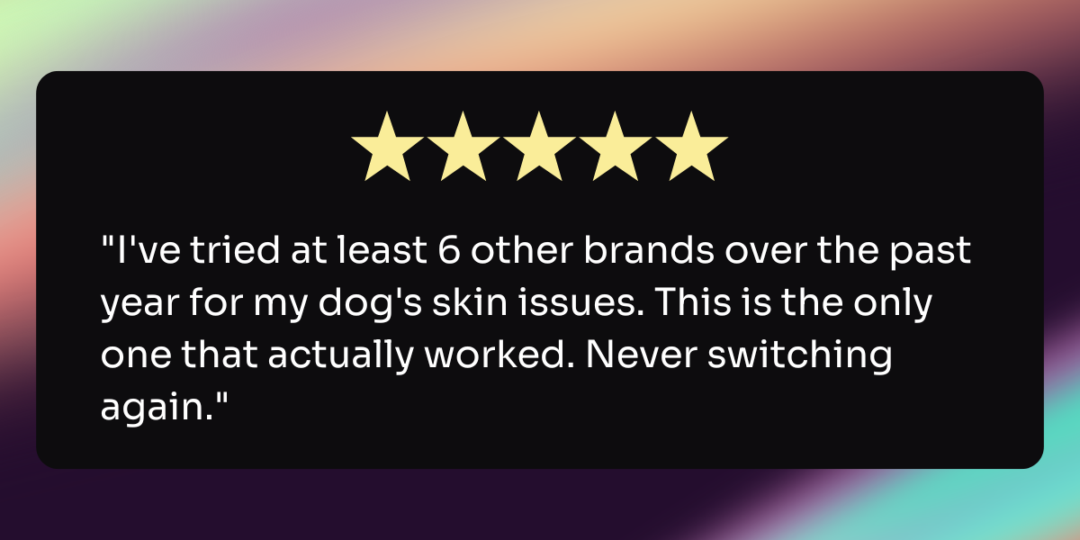
What it looks like: “Finally found something that works,” “This is exactly what I needed,” “Solves my exact problem,” “After trying everything else,” “The only thing that’s worked for me,” “Why didn’t I find this sooner.”
Why it predicts repeat purchases: These customers have tried alternatives and failed. The relief your product gives them goes beyond casual satisfaction. It creates loyalty because the pain of going back to searching is higher than the friction of staying.
What to do with this signal:
- Immediately add these customers to your loyalty program
- Send replenishment reminders before they run out (don’t make them search again)
- Recommend subscriptions with “never run out” messaging
- Use their testimonials in ads targeting people with the same problem
- Create “success story” marketing campaigns with their reviews
Signal #4: Identity-Aligned Language
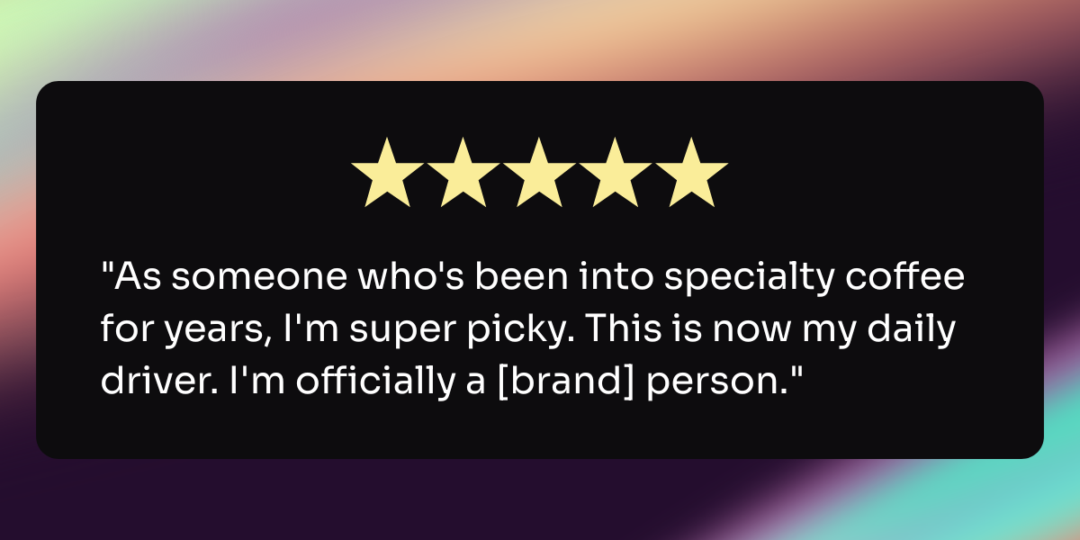
What it looks like: “I’m a [your brand] customer now,” “Officially converted,” “This brand gets me,” “Feels made for people like me,” “As an [identifier], this is perfect,” “Finally a brand that understands.”
Why it predicts repeat purchases: When customers incorporate your brand into their identity, it’s an expression of who they are. Identity-aligned purchases are self-reinforcing because buying again confirms their self-concept.
What to do with this signal:
- Feature these customers in community content (they want to be seen as insiders)
- Invite them to exclusive groups, forums, or events
- Give them influencer/ambassador opportunities
- Send them branded merchandise (they’ll actually wear it)
- Ask for referrals (they’re already evangelizing anyway)
Signal #5: Routine Integration Mentions
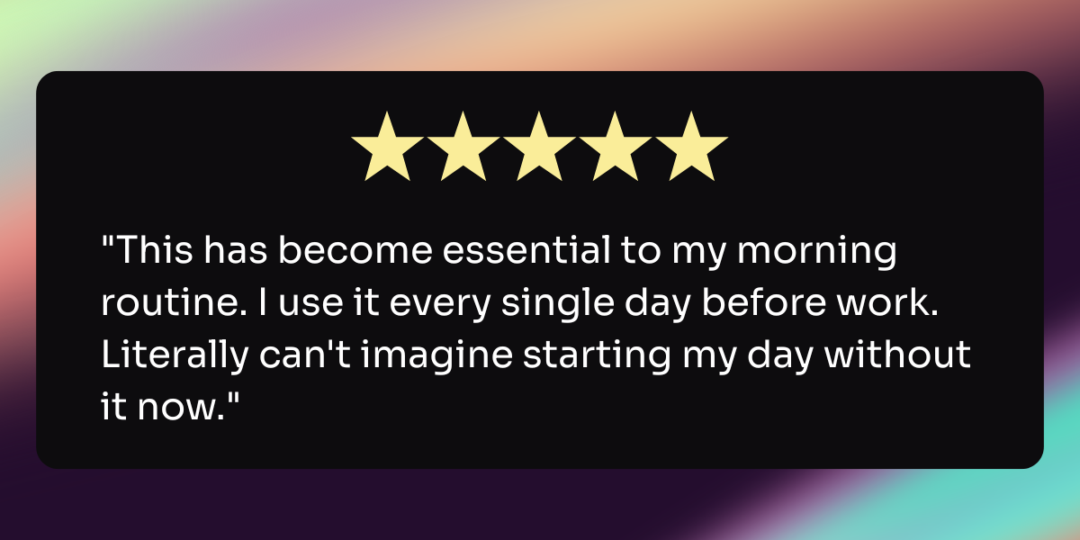
What it looks like: “Part of my morning routine now,” “Use it every day,” “Can’t imagine my routine without this,” “Built into my weekly schedule,” “Goes everywhere with me,” “Always in my bag.”
Why it predicts repeat purchases: Routine integration means your product has achieved habit status. Breaking a habit requires conscious effort. Repurchasing to maintain the habit is the path of least resistance.
What to do with this signal:
- Set up automatic replenishment reminders based on usage frequency they mention
- Offer subscriptions with auto-delivery matched to their routine (“every 30 days”)
- Send routine optimization content (“5 ways to enhance your morning routine with [product]”)
- Create “streak” mechanics in loyalty programs (i.e. reward consecutive orders)
- Bundle with other routine-compatible products
Signal #6: Upgrade Intent or Premium Willingness
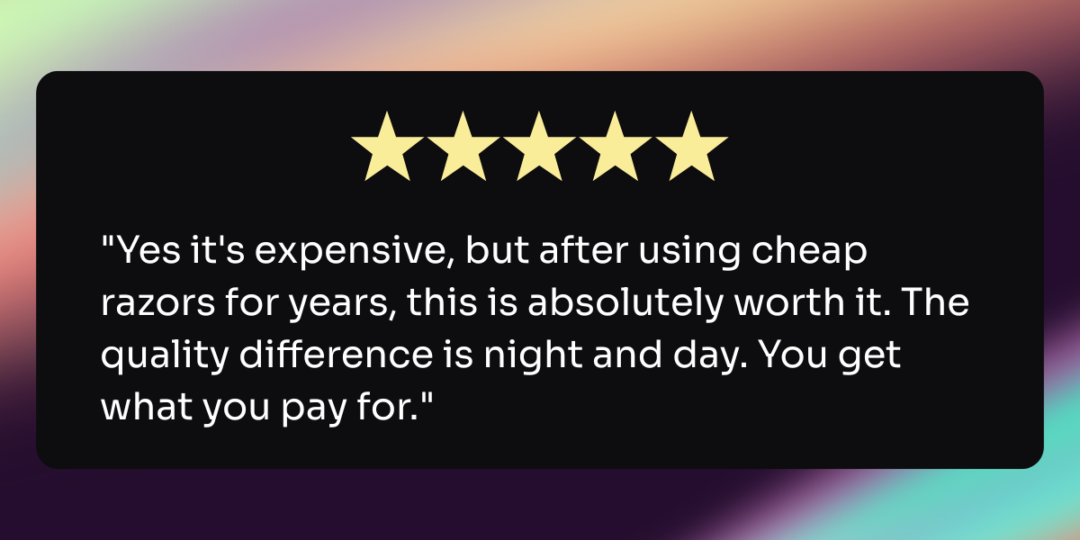
What it looks like: “Worth the price,” “Would pay even more,” “Better than cheaper alternatives,” “Investment piece,” “Quality over price,” “Upgrading from [budget option],” “Premium but worth it.”
Why it predicts repeat purchases: These customers have already justified premium pricing to themselves. They’re value-focused buyers who’ll pay more for quality. Premium customers repurchase premium products.
What to do with this signal:
- Introduce these customers to your premium product line first
- Offer them upsells and cross-sells (they’re receptive)
- Don’t discount to these customers (it devalues their smart choice)
- Feature them in marketing campaigns about ROI and value
- Ask them to review premium/flagship products specifically
Signal #7: Gift-to-Self Framing
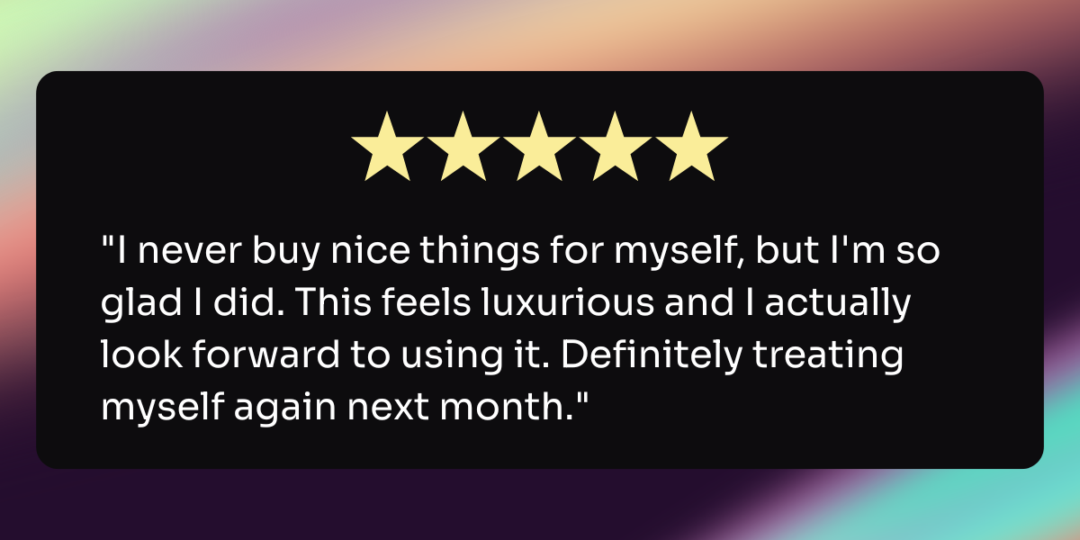
What it looks like: “Treated myself,” “I deserve this,” “Self-care purchase,” “Worth the splurge,” “Personal investment,” “Finally buying for myself instead of others.”
Why it predicts repeat purchases: Gift-to-self framing creates a self-reinforcement loop. The first purchase worked emotionally (they feel good about treating themselves), which justifies doing it again. Self-care purchases become recurring emotional regulation.
What to do with this signal:
- Time marketing around self-care moments (end of month, after stressful periods, seasonal transitions)
- Use “you deserve this” messaging in retargeting
- Create monthly subscription framing (“a monthly treat for yourself”)
- Bundle products as “self-care kits”
- Send birthday/milestone emails with “treat yourself” offers
The Inverse Signals: Review Language That Predicts Low Repeat Purchase
Just as important as knowing what predicts repeat purchase is knowing what predicts one-and-done behavior. This blog covers review churn signals in more detail.
Red Flag #1: Conditional Satisfaction
Language: “Good for now,” “Works fine for what I need currently,” “Will use until I find something better,” “Decent placeholder.”
These customers are satisfied but actively keeping options open. They’re comparison shopping in their mind even while leaving positive reviews.
Red Flag #2: Gift-for-Others Mentions (Without Personal Intent)
Language: “Great gift,” “My mom loved it,” “Perfect for my friend,” but no indication they’d buy for themselves.
Gift buyers are valuable, but if they never indicate personal interest, they likely won’t repurchase unless it’s for another gift occasion.
Red Flag #3: One-Time Use Case Framing
Language: “Perfect for [specific event],” “Worked great for vacation,” “Good for the wedding,” “Exactly what I needed for [one-time situation].”
The product solved a temporary problem. Unless they have recurring instances of that problem, they won’t be back.
Red Flag #4: Passive Satisfaction Language
Language: “Fine,” “Okay,” “Does what it says,” “No complaints,” “Adequate.”
Indifference doesn’t drive loyalty. These customers will switch to whatever’s on sale or recommended by a friend next time.
Red Flag #5: Price Anchoring
Language: “Only bought because it was on sale,” “Used a discount code,” “Waited for Black Friday,” “Wouldn’t pay full price.”
Discount-driven customers are inherently price-sensitive. They’ll repurchase only when you discount again, training them to never pay full price.
Predict Repeat Purchase Behavior With Stamped
Everything in this guide depends on collecting enough reviews to spot patterns and having the tools to analyze them at scale.
Stamped helps you:
- Collect high-volume reviews from every customer, not just the ones who volunteer feedback
- Capture detailed review text that contains the language signals predicting repeat purchase
- Ask custom questions that surface specific signals (routine use, problem fit, future intent)
- Access your complete review data for AI analysis and pattern detection
- Integrate with your marketing stack so high-signal customers automatically enter retention workflows
If you’re ready to predict repeat purchase from review signals, book a demo with Stamped to see how we help brands collect the review data that makes this level of intelligence possible.
Related Articles
End of Year Recap: The Best Moments for Stamped in 2024
Look back at Stamped’s biggest 2024 milestones! Discover how our Klaviyo upgrade, Shopify widget revamp, new loyalty analytics, and Repeat acquisition drove retention and customer success.
by Aiden Brady
Customer Insights
Retention Marketing Strategies

9 AI Prompts to Analyze Your Product Reviews Today
Your product reviews are sitting there, packed with insights about what's working, what's not, and what your customers actually care about. But let's be honest, who has time to read through hundreds (or thousands) of reviews to find the patterns?
by Aiden Brady
Reviews

Beyond the Numbers: Unlocking BFCM 2024
Black Friday Cyber Monday (BFCM) may bring high sales, but new customers often don’t return. Discover how to drive repeat purchases and retain customers post-BFCM.
by Sammi Wong
Customer Insights